Blog > Vascular Diseases > Hidden Dangers If You Don’t Treat Varicose Veins
Hidden Dangers If You Don’t Treat Varicose Veins
18-October-2025Category: Vascular Diseases
Most people believe varicose veins to just be a cosmetic issue, but in reality, they are a
serious medical complication and pose a severe threat to your life! Not only do they make your
legs look ugly but also negatively affect your body’s blood circulation, thus being the sole
reason for many venous disorders and other health concerns.
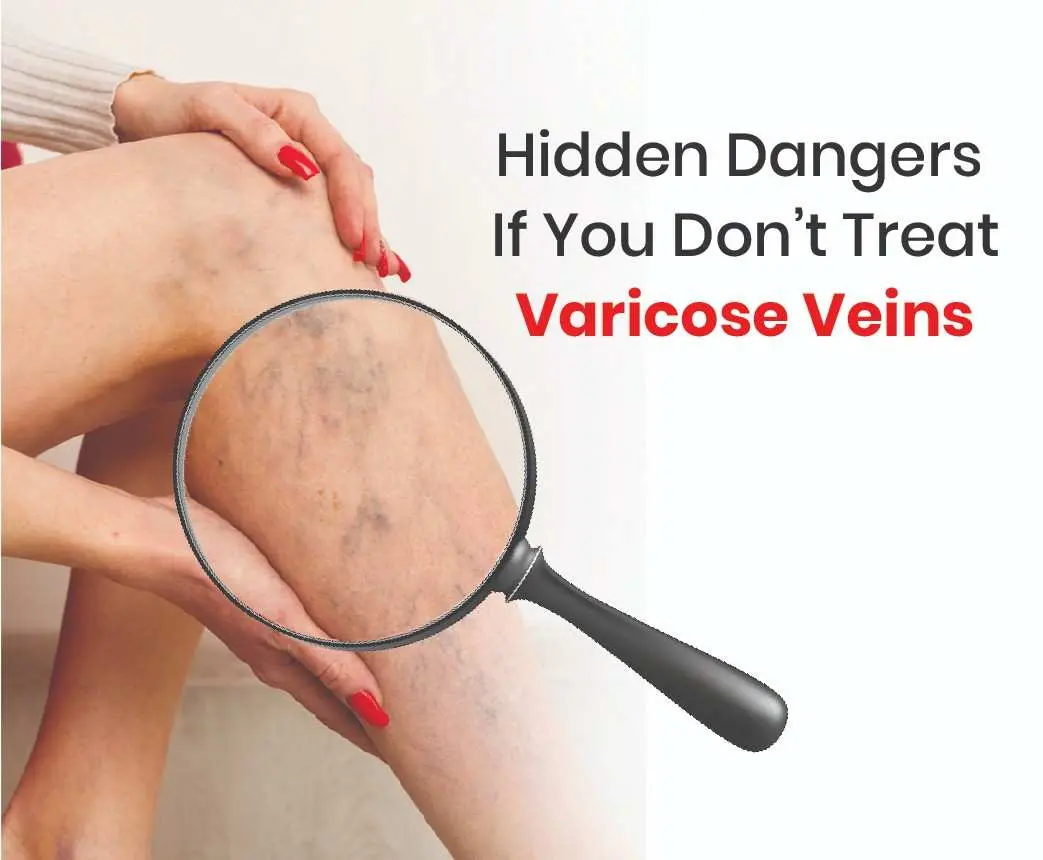
Today, as many as 30% of the people suffer from these bulging and swollen veins that can be felt
and seen right under the surface of the skin in the lower region of the legs. Caused when
certain leg veins with a faulty valve become incapable of sending the deoxygenated blood back to
the heart, these appear as bluish-purple veins and result in pooling of blood.
Varicose veins are a clear sign of some serious underlying health issues that must be addressed
in a timely manner. Painful varicose veins must be immediately reported to your doctor as any
delay in diagnosis and treatment can result in irreversible health conditions.
Get Your First Doppler Scan FREE — Worth ₹4,500!
Below are the top 6 medical conditions that may crop up due to the lack of treatment of varicose
veins: Swelling – As the pressure builds up in the faulty veins, the blood fluid leaks into the
surrounding tissues and causes swelling. Swelling can be felt like a tight sensation in your
legs, the socks may begin to leave an impression on your legs, and in severe cases, the swelling
can be to an extent that your shoes may not fit your feet anymore. Most times, elevating your
legs with the help of a pillow will help reduce the swelling temporarily.
Skin Ulcers – Open sores or wounds that are difficult to heal are called skin ulcers. Swelling
in the legs for an extended duration of time can lead to skin colour changes in the affected
area. The skin may also turn hard as the swollen tissues hamper the blood flow and restrict the
nutrients and oxygen from reaching the involved tissues. Reducing the leg swelling is vital to
healing these open sores.
Skin Infection – As the tissues get stretched due to the swelling, the body loses its natural
defense mechanism to fight against infections. The bacteria on the skin surface may get into the
body and cause a bacterial infection referred to as cellulitis. The infected area becomes red
and feels warm. This generally requires antibiotics for treatment. Reducing the swelling is also
likely to help in the recovery process.
Bleeding – Right below the surface of the skin, a large amount of blood remains pooled in the
varicose veins and the surrounding tissues. If by any chance you get injured and hurt, cut or
damage your veins, there is bound to be significantly more bleeding than usual. If the injury is
very large, it will probably take you longer than normal to stop the bleeding.
Thrombophlebitis – This refers to an inflammatory process where a blood clot is formed that
blocks one or more of your veins, most commonly in the legs. It is highly probable for untreated
varicose veins to cause blood clotting. The damaged area becomes very painful, it is warm to
touch, and the veins also becomes quite hard.
Deep Vein Thrombosis (DVT) – In about 25% cases where people have developed blood clots in their
veins, the blood clots are formed in the deeper veins and this condition is referred to as DVT.
The biggest risk in DVT is that of the blood clot breaking off and travelling to the lungs as
that can result in the life-threatening disease called pulmonary embolism. DVT is a medical
emergency and must be treated in a priority.
Varicose veins, whether painful or not, must be treated by a vascular expert to prevent further
damage and unforeseen vein health complications. For the treatment of varicose veins, you need
not undergo surgery as today, there are available minimally-invasive procedures that are
painless and have zero downtime.
Avis Hospitals’ team of vascular specialists and interventional radiologists have expertise in
treating the varicose veins with the latest process that is a no-cut,
no-scar, and no-stitch procedure. The process requires only local anaesthesia and the patient
can go back home the same day to resume work and everyday activities from the next day itself!
If you are eager to know more about the process, get your medical
check-up done from experienced doctors, learn about the treatment expenses, and ask your queries
regarding the available medical insurance assistance, feel free to schedule an appointment.
Confused about treatment options? Our experts will guide you step by step.
Early Signs of Venous Insufficiency
Like most other medical conditions, our body gives us numerous hints about venous insufficiency
as well. It is vital for us to be aware and keep an eye for the below-mentioned symptoms
:
1. The skin changes in the affected area accompanied by itching. This medical
condition is also
referred to as Stasis Dermatitis. 2.The skin may also turn hard and brown or dark red in colour 3.Pain and swelling in the leg along with a feeling of heaviness 4.Tingling sensation in the damaged area
Get Your First Doppler Scan FREE — Worth ₹4,500!
Symptoms of Venous Ulcers
If we fail to get ourselves treated after the early signs of venous insufficiency, the condition
may worsen and lead to active venous ulcers. Below mentioned are the easiest to recognize
symptoms of leg ulceration:
1. Shallow sore with a red base that may be covered with a yellow tissue
2. Uneven borders of the sore
3. Pain in the leg
4. Surrounding skin turns shiny, tight, warm, and also discoloured
5. Infected sores may have a bad odour and pus drain from the wound
Wound Care
If you have developed leg ulcers, it is essential for you to take proper care as the open sore
may get infected and lead to many other severe medical complications. We have made a to-do list,
please make a note of the below tips: 1. You must keep the wound clean and bandaged to prevent getting infected. 2. You must change the dressing frequently. Always ensure to clean the wound
before doing the dressing. 3.Dressing and skin around the wound must always be kept dry. 4.Always keep the skin around the wound moisturized to reduce itching and
irritation. 5.Ask your venous expert if you must wear compression stockings above your
dressing and/or bandage.
Prevention
There are some easy tips and tricks to prevent varicose veins, venous insufficiency, and related
disorders of the veins. Simply note down the below points and incorporate them in your day to
day life: 1.Eat healthy food 2.Exercise everyday 3.Quit smoking 4.Blood sugar control for diabetic patients 5.Plenty of sleep 6.Regulate blood pressure and cholesterol levels 7.Weight loss for obese or overweight people
Even if you have already been diagnosed with venous insufficiency, you can still reduce the
chances of venous ulcers by following the below tips: 1.Wear compression stockings as they are known to improve the blood flow in the
affected area. 2.They offer relief from the leg pains, help reduce the swelling and also
assist with healing. 3.As frequently as possible, place your feet above the level of your heart. Lie
down on the bed
and use one or more pillows to lift your feet higher. This will make it easier for the blood to
move back to the heart and prevent blood pooling. 4.Ensure to eat a nutritious diet and perform moderate and low impact exercises
every day. 5.Ensure to take the medicines as prescribed by your medical practitioner.
Conclusion
Varicose veins, chronic venous insufficiency, leg ulcers, and other venous disorders have become
fairly common due to the sedentary lifestyle of most people in urban cities. Although not
serious, all venous medical conditions must be treated in a priority by trusted and reliable
vascular specialists only.
Dr. Rajah V Koppala is a qualified and internationally trained vascular expert who specializes
in the minimally invasive and painless laser treatment of varicose veins. At Avis Hospitals, we
have the latest equipment and all modern amenities in-house for efficient treatment by the
technique.
If you or anyone in your family is suffering from vascular medical conditions, do not delay in
scheduling a consultation with the renowned interventional radiologist Dr. Rajah V Koppala at
Avis Hospitals. The laser treatment is suitable for people of all ages and we ensure quick
recovery with minimal post-operative care. Book an appointment today!
Get In Touch With Us
info@avisvascularcentre.com
📞 +91 80089 49900
Book Appointment
Frequently Asked Questions
For any unanswered questions, reach out to our support team via
email. We’ll respond as soon as possible to assist you.
For Enquiry
✉
info@avisvascularcentre.com
☎
+91 80089 49900
How do i book an appointment?
−
Are varicose veins really a serious medical problem?
Yes. Varicose veins are not just a cosmetic concern. They indicate poor blood circulation in the legs and, if left untreated, can lead to swelling, skin damage, infections, blood clots, and serious complications like deep vein thrombosis.
Why do varicose veins cause leg swelling?
+
Faulty vein valves allow blood to pool in the legs, increasing pressure inside the veins. This pressure causes fluid to leak into surrounding tissues, leading to persistent leg swelling that may worsen over time.
Can varicose veins cause wounds or ulcers on the legs?
+
Yes. Long-term swelling and poor circulation can damage the skin and underlying tissues, resulting in open sores known as venous or skin ulcers. These ulcers heal slowly and require timely medical care to prevent infection.
How dangerous are blood clots caused by varicose veins?
+
Blood clots related to varicose veins can be dangerous, especially if they form in deep veins. Deep vein thrombosis (DVT) is a medical emergency because a clot can travel to the lungs and cause a life-threatening pulmonary embolism.
Should painless varicose veins also be treated?
+
Even painless varicose veins should not be ignored. They can silently progress and later cause pain, swelling, skin changes, ulcers, or blood clots. Early evaluation helps prevent serious complications and long-term damage.
Do you accept walk-in patients?
+
Walk-in patients are accepted based on availability.