Blog > Diagnosis and Treatment > Full Patient Journey of Glue-Based Vein Treatment
Full Patient Journey of Glue-Based Vein Treatment
18-October-2025Category: Diagnosis and Treatment
For many people, varicose veins start as a cosmetic concern — visible, bulging veins on the
legs. But over time, they can lead to symptoms such as heaviness, swelling, cramps, skin
darkening, and even ulcers. Modern vascular medicine now offers a comfortable, minimally
invasive solution: glue-based vein closure (such as VenaSeal®).
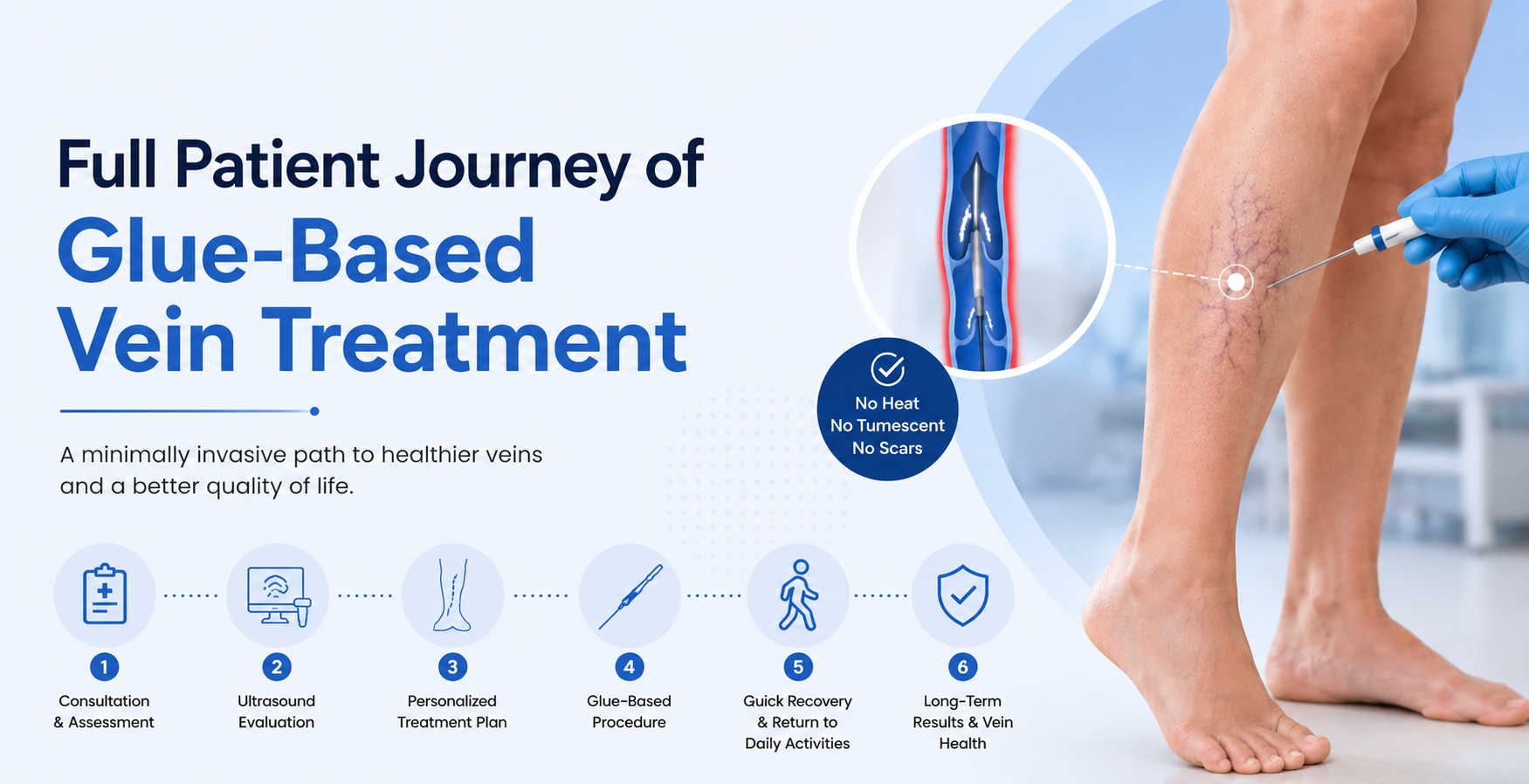
Here’s what a typical patient journey looks like, from first diagnosis to complete
recovery.
Get Your First Doppler Scan FREE — Worth ₹4,500!
Step 1: Initial Consultation and Evaluation
The journey begins with a visit to a vascular specialist. During this appointment, you’ll
discuss your symptoms, medical history, and lifestyle. Your doctor will examine your legs to
check for visible varicose veins, skin changes, and signs of advanced disease.
If glue-based treatment might be suitable, your specialist will explain how the procedure works,
its benefits, and possible alternatives such as
Radiofrequency Ablation (RFA).
Step 2: Diagnostic Ultrasound Mapping
A duplex ultrasound scan is the gold standard for diagnosing varicose veins. It provides a
detailed map of your vein structure, showing which veins are functioning poorly and where blood
is pooling.
This step ensures your treatment plan is precise, targeting only the diseased veins and
preserving healthy ones.
Confused about treatment options? Our experts will guide you step by step.
Step 3: Pre-Procedure Preparation
Once glue closure is chosen, your doctor will give you instructions to follow before the
procedure. These may include:
• Wearing loose, comfortable clothing • Staying well-hydrated • Avoiding certain medications if advised • Arranging for a short rest period after the procedure if needed • Unlike some vein treatments, there’s usually no need for fasting or general
anaesthesia.
Step 4: The Glue-Based Procedure
On the day of treatment, you’ll be positioned comfortably, and your leg will be cleaned and
prepared under sterile conditions.
Here’s how it unfolds: • A small numbing injection is given at the catheter entry point. • Using ultrasound guidance, a thin catheter is inserted into the affected
vein. • The medical adhesive is delivered in precise amounts, sealing the vein
section by section. • Once the vein is closed, the catheter is removed, and a small dressing is
applied. • The entire process usually takes 20–30 minutes per vein and is virtually
painless for most patients.
Step 5: Immediate Post-Treatment Phase
You can stand up and walk right after the procedure. There’s usually no need for compression
stockings and no major activity restrictions — meaning you can return to work or household tasks
the same day.
Mild tightness or tenderness in the treated area is normal and generally resolves within a few
days.
Step 6: Recovery and Follow-Up
Over the next few weeks, your treated vein will gradually shrink and fade. Most patients notice
a reduction in symptoms such as heaviness, swelling, and discomfort within days.
Your doctor will schedule a follow-up ultrasound to confirm that the treated vein is fully
closed and to check the overall health of your leg veins.
Step 6: Recovery and Follow-Up
Over the next few weeks, your treated vein will gradually shrink and fade. Most patients notice
a reduction in symptoms such as heaviness, swelling, and discomfort within days.
Your doctor will schedule a follow-up ultrasound to confirm that the treated vein is fully
closed and to check the overall health of your leg veins.
Step 7: Long-Term Results
Glue-based vein closure has a success rate of over 90–95%, with durable results and minimal
recurrence when combined with healthy lifestyle habits. Regular walking, maintaining a healthy
weight, and avoiding prolonged standing or sitting will help protect your vein health.
The Takeaway
From diagnosis to recovery, glue-based treatment offers a smooth, patient-friendly journey. With
no heat, minimal injections, and an almost immediate return to daily life, it’s redefining how
varicose veins are treated in India. At Avis Vascular Centre, each step of your journey is
guided by experienced specialists using the latest technology — ensuring safe, effective, and
lasting results.
For any unanswered questions, reach out to our support team via
email. We’ll respond as soon as possible to assist you.
For Enquiry
✉
info@avisvascularcentre.com
☎
+ 91 80089 49900
What is glue-based treatment for varicose veins?
−
Glue-based vein treatment is a minimally invasive procedure in which a medical adhesive is used to
seal the faulty vein that causes varicose veins. Once sealed, blood is naturally redirected to
healthier veins, relieving symptoms such as pain, swelling, and heaviness. The treated vein is
gradually absorbed by the body over time.
Why is glue treatment considered suitable for working professionals?
+
Glue treatment is especially suitable for working professionals because it requires minimal time,
causes very little discomfort, and allows patients to return to work almost immediately. The
procedure is quick, does not require hospital admission, and fits easily into a busy schedule
without disrupting professional commitments.
How much downtime is required after glue-based vein treatment?
+
Most patients can walk immediately after the procedure and resume normal activities, including
office work, on the same day. There is no requirement for prolonged rest or medical leave, making it
ideal for individuals who cannot afford extended downtime.
Is wearing compression stockings mandatory after glue treatment?
+
In many cases, compression stockings are not required after glue-based vein closure. This is a major
advantage for professionals, especially in warm climates or formal work environments, as it
eliminates the discomfort and inconvenience of wearing medical stockings during working hours.
Does glue treatment require multiple hospital visits?
+
Glue-based treatment is usually completed in a single session. Unlike some other vein treatments
that may need staged procedures or repeated visits, glue closure often treats the affected vein in
one sitting, reducing the need for multiple appointments and time away from work.