
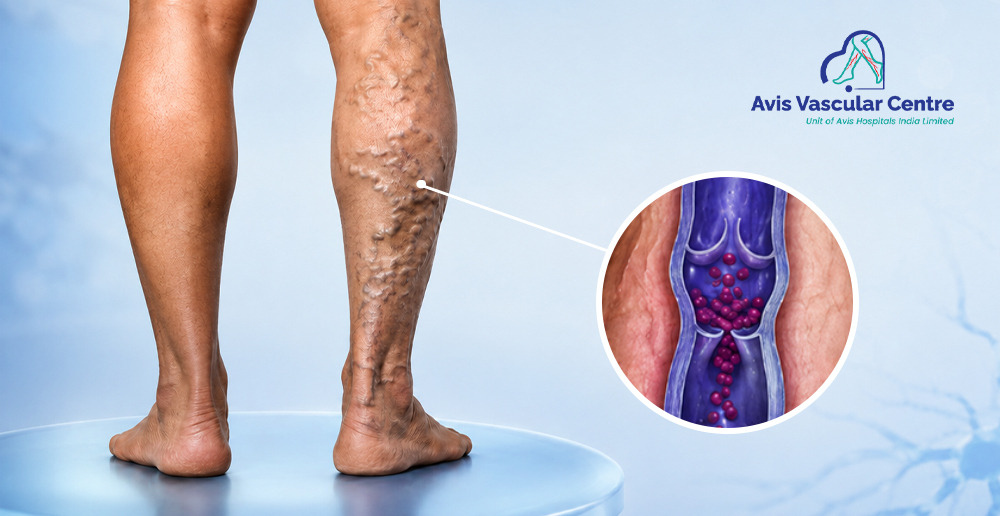
Varicose veins are enlarged, swollen, and visibly twisted veins that commonly develop in the legs. They occur when the valves inside the veins, which help blood move upward toward the heart, become weak or fail to function properly. As a result, blood flows backward and accumulates in the vein, increasing pressure and causing the vein walls to stretch and bulge over time..
For many individuals, varicose veins may initially appear as a cosmetic concern. Over time, they can begin to interfere with comfort and daily activities, especially after long periods of standing or walking.
Understanding what varicose veins are helps patients recognise early symptoms and seek timely medical guidance. Early diagnosis prevents the condition from progressing and protects overall vein health.
Varicose veins develop when the vein valves responsible for maintaining one-way blood flow become weak or damaged. When these valves fail to close properly, blood flows backward instead of moving efficiently toward the heart. This backward flow leads to increased pressure within the vein, causing it to enlarge and become distorted.
These causes directly affect how blood circulates through the veins and play a central role in the formation and progression of varicose veins.
Varicose veins are more likely to develop in certain individuals due to biological, hormonal, or occupational influences. While risk factors do not directly cause the condition, they increase the likelihood of vein valve dysfunction and vein enlargement over time.
Recognising these risk factors early allows individuals to take preventive steps that may slow progression and reduce symptom severity.
Symptoms of varicose veins often develop gradually and may worsen as the condition progresses. Some people notice visible changes first, while others experience discomfort before veins become prominent. Symptoms are commonly more noticeable toward the end of the day.
As symptoms advance, skin changes and persistent swelling may develop, making early recognition important for preventing complications.
For any unanswered questions, reach out to our support team via email. We’ll respond as soon as possible to assist you.