Blog > Vascular Diseases > 5 Early Signs of DVT
Deep Vein Thrombosis (DVT) is a serious medical condition characterized by the formation of
blood clots in deep veins, typically in the legs. Deep veins are a crucial component of the
circulatory system, responsible for returning blood from the body’s extremities, such as the
arms and legs, back to the heart. Unlike superficial veins that lie closer to the skin’s
surface, deep veins are located deep within the muscles and tissues of the body.
If left untreated, DVT can lead to life-threatening complications such as pulmonary embolism. If
the blood clots break loose from the vein wall, they can travel through the bloodstream and
lodge in the lungs, leading to a condition known as pulmonary embolism (PE).
Hence, recognizing the early signs and symptoms of DVT is crucial for timely diagnosis and
treatment. In this blog post, we will explore five early signs and symptoms of DVT that everyone
should be aware of.
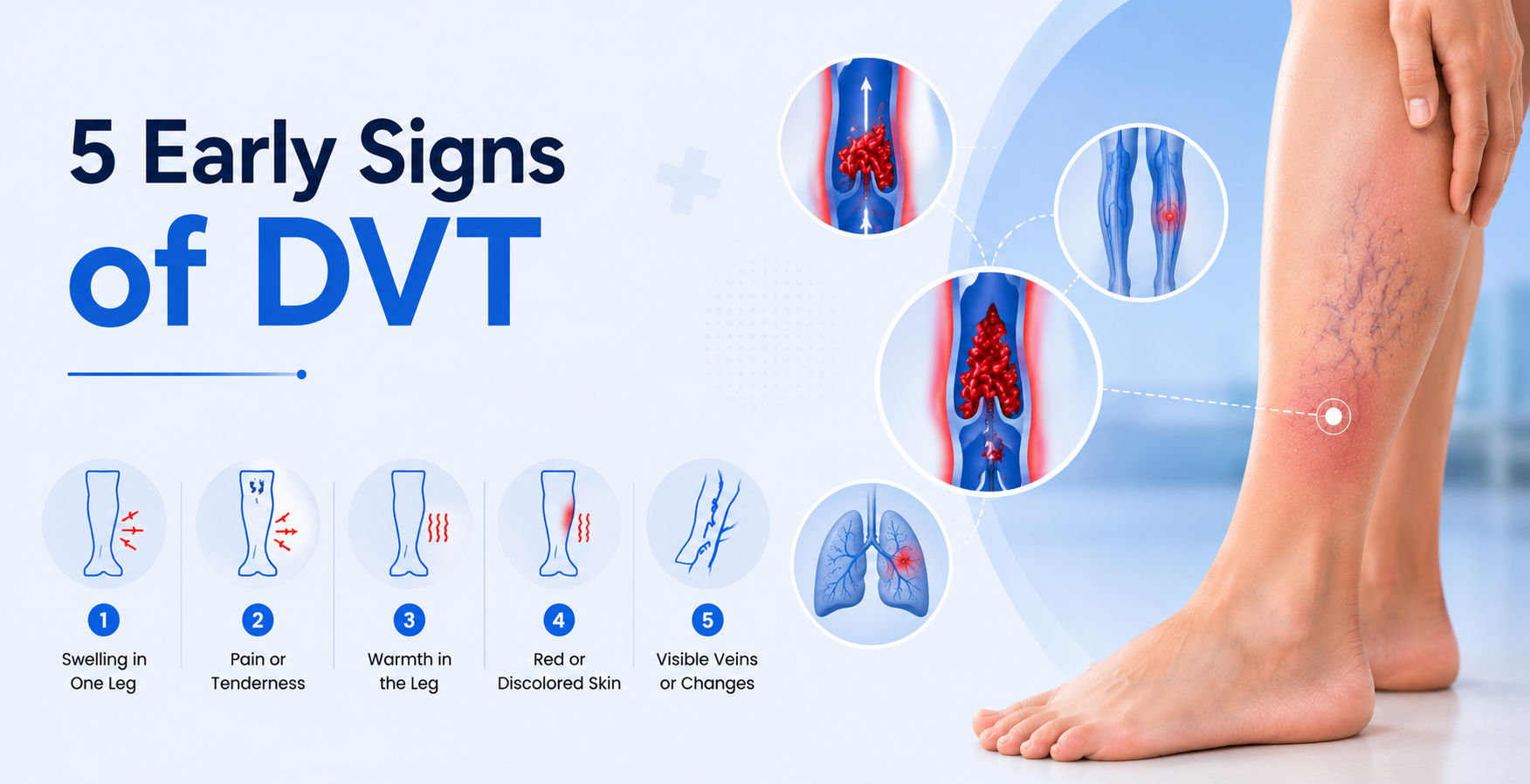
Swelling: One of the most common signs of
DVT is swelling, particularly in one leg. The affected leg may appear noticeably larger or
swollen compared to the other leg. This swelling usually occurs without any apparent injury and
may worsen over time. It is essential to pay attention to any unexplained swelling, especially
if it is accompanied by pain or tenderness.
Pain or Tenderness: Pain and tenderness in the affected
leg are also common symptoms of DVT. The pain may feel like cramping or soreness and is often
more pronounced when standing or walking. In some cases, the pain may be persistent and worsen
with movement. If you experience unexplained leg pain or tenderness, particularly in conjunction
with swelling, it is essential to seek medical attention promptly.
Warmth and Redness: DVT can cause the skin over the affected
area to feel warm to the touch and appear red or discolored. This warmth and redness typically
occur in the area surrounding the blood clot. It is important not to dismiss these symptoms as
they may indicate an underlying vascular issue such as DVT. If you notice any unusual warmth or
redness in your leg, especially if it is accompanied by other symptoms, consult a healthcare
professional immediately.
Visible Veins: In some cases of DVT, the affected veins may
become more visible or prominent beneath the skin’s surface. This may manifest as a bulging or
rope like appearance of the veins in the affected leg. While not all cases of visible veins
indicate DVT, it is essential to be vigilant and consult a healthcare provider if you notice any
sudden changes in your veins’ appearance.
Difficulty Walking or Standing: As DVT progresses, it can
impair blood flow in the affected leg, leading to difficulty walking or standing. You may
experience discomfort or heaviness in the leg, making it challenging to move normally. If you
notice any changes in your mobility or find it increasingly difficult to walk or stand, it is
crucial to seek medical attention promptly.
Thus, Deep Vein Thrombosis (DVT) is a serious medical condition that requires prompt
recognition and treatment. Being aware of the early signs and symptoms of DVT can help
individuals seek timely medical care and prevent potentially life-threatening complications.
If you experience any of the symptoms mentioned above, particularly if they occur suddenly
or persistently, do not hesitate to consult a healthcare professional. At Avis Vascular
Center, we offer several interventional treatments to manage DVT, aiming to prevent clot
propagation, reduce the risk of pulmonary embolism, alleviate symptoms, and minimize
long-term complications. Remember, early detection and intervention are key to managing DVT
effectively and reducing the risk of complications.