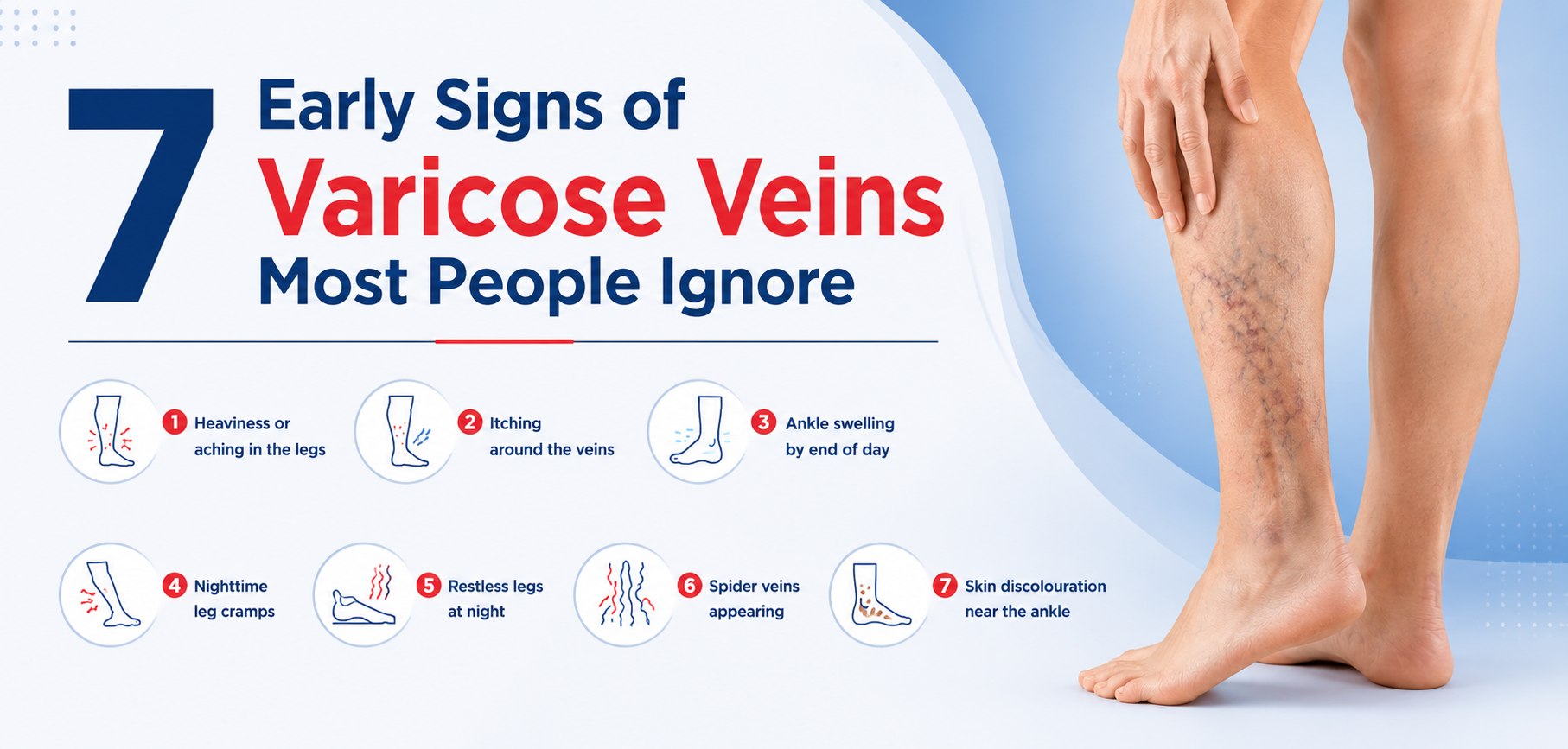
Varicose veins affect nearly one in three adults -yet most people dismiss the earliest warning
signs as nothing more than tired legs or a long day on their feet. The truth is, the early signs
of varicose veins often appear
months or even years before the visible, twisted veins emerge
beneath the skin. Recognising these symptoms early can make a significant difference in
treatment outcomes.
Here are seven symptoms of varicose veins that are easy to miss -and why you should pay
attention to them.
Early detection of varicose veins can prevent complications such as chronic venous
insufficiency, skin ulcers, and deep vein thrombosis.
1. Heaviness or aching in the legs
One of the earliest symptoms of varicose veins is a persistent feeling of heaviness, fatigue, or
dull aching in the legs -especially after prolonged standing or sitting. This happens because
damaged valves in the veins allow blood to pool, increasing pressure in the lower limbs.
2. Itching around the veins
Localised itching around the lower legs or ankles is a commonly overlooked early sign of
varicose veins. Increased venous pressure causes fluid to leak into surrounding tissue,
triggering inflammation and itching -long before any visible bulging occurs.
3. Ankle swelling by end of day
If your ankles or feet swell regularly in the evening but return to normal by morning, this
could be an early sign of varicose veins. The swelling, known as oedema, results from blood and
fluid accumulating in the lower extremities due to weakened vein walls.
4. Nighttime leg cramps
Frequent leg cramps at night -particularly in the calf muscles -are often linked to poor venous
circulation. As blood pools in the veins, it can irritate the surrounding nerves and muscles,
causing painful spasms that disrupt sleep. Many people chalk this up to dehydration or exercise,
but it may be an early symptom of varicose veins.
5. Restless legs at night
An uncomfortable urge to constantly move the legs, especially at rest, is associated with
underlying venous insufficiency. Restless leg
syndrome can be an early sign of varicose veins,
as poor blood flow creates uncomfortable sensations -tingling, throbbing, or crawling feelings
-that temporarily ease with movement.
6. Spider veins appearing
Spider veins -those fine, web-like red or purple lines visible just beneath the skin -are often
a precursor to varicose veins. Though smaller and typically painless, they signal that the
venous system is under increased pressure. Treating spider veins early can help prevent
progression to larger varicose veins.
7. Skin discolouration near the ankle
A brownish or reddish tinge developing around the ankles -known as haemosiderin staining -is
caused by iron deposits from red blood cells leaking through damaged vein walls. This subtle
skin change is a serious early sign of varicose veins and chronic venous insufficiency that
warrants prompt medical evaluation.
When to see a doctor
If you experience two or more of the symptoms of varicose veins listed above -even without visible vein
changes - consult a vascular specialist. Early intervention through lifestyle changes, compression
therapy, or minimally invasive procedures can prevent the condition from worsening significantly.
Risk factors include prolonged standing, obesity, pregnancy, a sedentary lifestyle, and a family history of
venous disease. Addressing these proactively is the first step in protecting your vascular health.