Blog > Vascular Diseases > Best Sleeping Position for Varicose Vein Patients
Having trouble falling asleep due to varicose veins? It is not just you. Leg cramps, throbbing,
restlessness, and swelling occur every night for millions of people with varicose veins, which interfere
with sleep and lower quality of life. Many people are unaware that how they sleep directly affects how well
they manage the symptoms of varicose veins The proper posture lowers venous pressure, promotes healthy
circulation, and permits the legs to heal overnight. All the information you require to maximize your sleep
for improved vein health is provided here.
Why Does Sleep Position Affect Varicose Veins?
When the one-way valves in leg veins deteriorate or malfunction, blood can pool instead of effectively
returning to the heart, resulting in varicose veins. Gravity and extended sitting or standing during the day
exacerbate this pooling. The greatest time for the body to recharge is at night, but only if circulation is
maintained. The incorrect way to sleep can:
• Increase nocturnal swelling by keeping blood in the lower legs for hours.
• Increased venous pressure, which causes restless legs and excruciating leg cramps
• Delay the normal decrease in inflammation during the day.
• By morning, symptoms like burning, heaviness, and ankle swelling became worse.
The good news is that you can significantly improve your mood every morning with a few easy postural
adjustments.
The Best Sleeping Position: Back with Legs Elevated
The gold standard sleeping position for varicose vein patients is lying on your back with the legs elevated
above heart level. This actively drains accumulated blood from the lower limbs back toward the heart by
using gravity to support venous return. Key advantages consist of:
• Significantly lessens leg and ankle swelling during the night.
• By morning, the legs no longer feel heavy, achy, or exhausted.
• Lessens the strain on spider and varicose veins
• Encourages venous return and lymphatic drainage.
• May lessen the frequency of excruciating leg cramps at night.
To raise your legs 6 to 12 inches above your heart, place one or two firm pillows under your ankles and
calves. Avoid placing pillows only under the knees as sharp bending can restrict flow behind the knee joint.
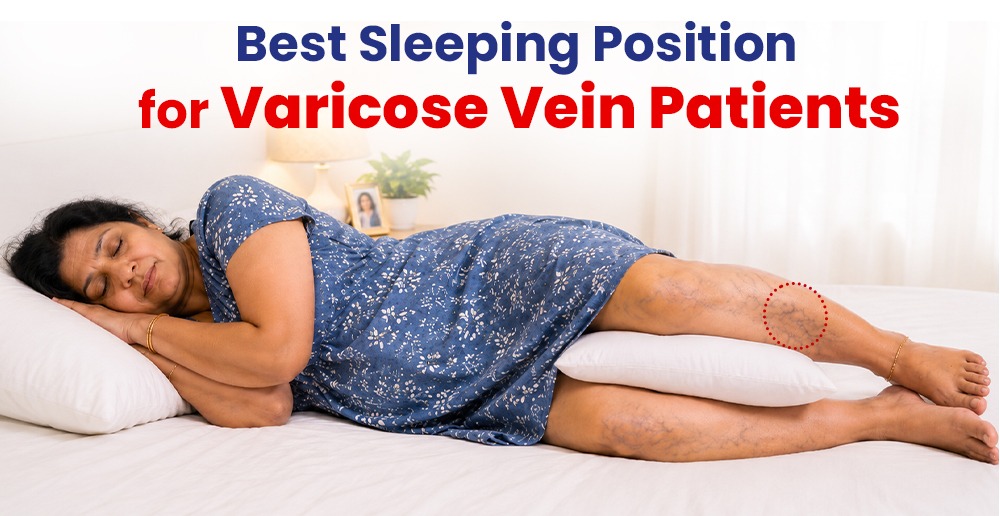
Second Best: Sleeping on Your Left Side
Lying on one's left side is a great option if resting on one's back is painful, particularly for expectant
mothers with varicose veins. The largest vein in the body, the inferior vena cava, travels along the right
side of the spine and is in charge of returning blood from the lower body to the heart. Sleeping on one's
left side prevents this vessel from being compressed, maintaining effective circulation.
Other benefits consist of:
• Promotes a smoother return of blood by lowering pressure on the inferior vena cava.
• Especially helpful when venous pressure is elevated during pregnancy
• The hips and lower back are less stressed when a pillow is positioned between the knees.
• Reduces total body tension as you sleep by assisting in maintaining spinal alignment.
Sleeping Positions to Avoid with Varicose Veins
Some common sleeping habits actively worsen varicose vein symptoms and should be avoided:
• Sleeping on one's stomach prevents leg elevation, raises abdominal pressure, and strains the lower back,
all of which impede venous return.
• Crossing the legs exacerbates swelling and discomfort by compressing veins and limiting blood flow even
when one is resting down.
• Sleeping flat without elevation: Any comfort from compression or movement during the day is undone by the
blood pooling in the lower limbs throughout the night.
• Sleeping on the right side reduces circulatory efficiency because it places greater strain on the inferior
vena cava than on the left.
• Sleeping in a heated room: Heat makes veins dilate even more, making you feel heavier and more throbbing
all night.
Night time Habits That Support Vein Health
Combine the right sleeping position with these supportive habits for maximum overnight relief:
• Do 10 to 15 ankle circles and calf raises before bed to stimulate circulation
• Stay well hydrated throughout the day — dehydration thickens the blood and worsens circulation
• Remove compression stockings before sleep unless specifically instructed otherwise by your doctor
• Keep the bedroom cool — a lower ambient temperature helps prevent vein dilation
• Avoid heavy meals, alcohol, and sodium-rich foods in the evening, as all three contribute to water
retention and swelling
• Consider a short walk after dinner to help clear pooled blood from the legs before lying down
While these measures provide meaningful symptom relief, they do not treat the underlying vein damage. If you
are experiencing persistent pain, visible vein changes, or skin complications, consult a vascular specialist
for a proper diagnosis and treatment plan.
Conclusion
Sleep is one of the simplest and most overlooked tools for managing varicose vein symptoms. By sleeping on
your back with legs elevated or on your left side, you give your veins the best chance to recover overnight.
Many patients report a significant decrease in morning heaviness, edema, and discomfort when the proper
position is combined with supportive evening behaviours.
However, sleep modifications should be used in conjunction with medical care rather than in place of it. A consultation with a vascular specialist
can assist you in exploring long-term, individualized treatment
options if your symptoms are ongoing or getting worse