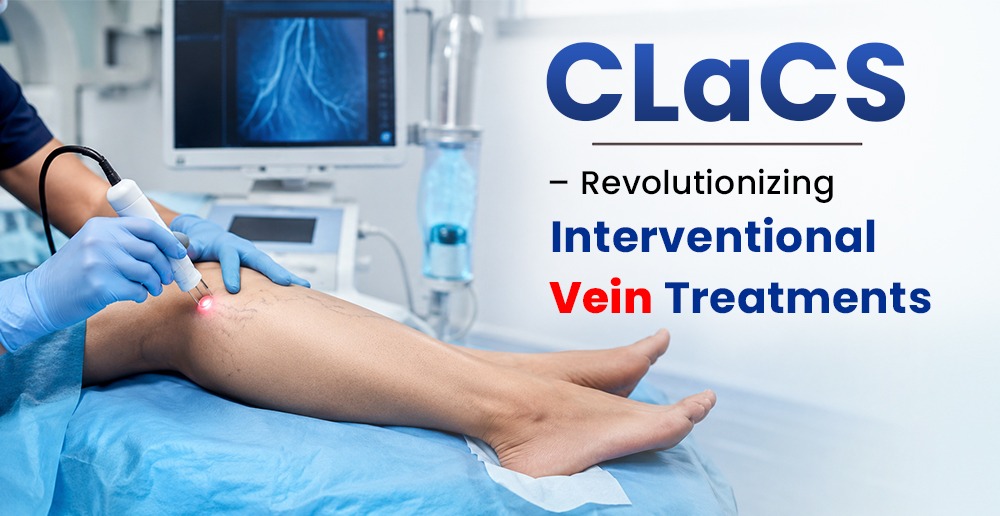
In the realm of interventional vein treatments, advancements are continually pushing the
boundaries of effectiveness and patient comfort. One such breakthrough poised to revolutionize
this field is the CLaCS treatment. Unlike traditional methods like sclerotherapy, CLaCS offers a
new paradigm for treating varicose veins and venous insufficiency, promising superior outcomes
and patient satisfaction.
Get Your First Doppler Scan FREE — Worth ₹4,500!
What is CLaCS?
CLaCS combines two innovative technologies: mechanochemical ablation and sclerotherapy.
Mechanochemical ablation involves the use of a rotating wire within the vein, combined with the
infusion of a liquid sclerosant. This dual-action approach maximizes the efficacy of vein
closure while minimizing discomfort and side effects.
Confused about treatment options? Our experts will guide you step by step.
Here's a step-by-step overview of the CLaCS procedure:
Patient Preparation: The patient is positioned comfortably on the treatment
table, and the
targeted vein is identified using ultrasound imaging. The skin overlying the vein is cleaned and
sterilized, and local anesthesia is administered to numb the area. Catheter Insertion: A small incision is made near the target vein, and a
specialized catheter is
inserted into the vein under ultrasound guidance. The catheter features a rotating wire tip and
multiple side holes for the infusion of sclerosant solution. Mechanical Agitation: Once the catheter is properly positioned within the vein,
the rotating
wire tip is activated. The mechanical agitation disrupts the endothelial lining of the vein,
facilitating the penetration of the sclerosant into the vein wall. Sclerosant Infusion: Simultaneously with the mechanical agitation, a liquid
sclerosant solution
is slowly infused through the side holes of the catheter. The sclerosant irritates the vein
wall, causing inflammation and eventually leading to vein closure. Vein Closure: The combination of mechanical disruption and sclerosant infusion
triggers a series
of biological responses within the vein, ultimately resulting in its closure. Blood flow is
rerouted to healthier veins, and the treated vein is gradually absorbed by the body over
time. Post-procedure Care: After the procedure, the incision site may be covered
with a small bandage.
Patients are typically advised to wear compression stockings to promote healing and reduce
swelling. They can usually resume normal activities shortly after the procedure, although
strenuous exercise and prolonged standing may be limited for a brief period.
CLaCS Advantage Over Sclerotherapy
While sclerotherapy has long been a cornerstone of vein treatment, it has its limitations.
CLaCS, however, addresses many of these shortcomings: Enhanced Precision: CLaCS allows for precise targeting of the affected vein,
minimizing damage
to surrounding tissue and reducing the risk of complications. Reduced Discomfort: The combination of mechanical agitation and sclerosant
infusion in CLaCS
results in less pain and discomfort compared to traditional sclerotherapy, making it a more
tolerable option for patients. Improved Cosmesis: CLaCS offers superior cosmetic outcomes, with fewer
instances of pigmentation
changes and other visible signs of treatment compared to sclerotherapy. Faster Recovery: Patients undergoing CLaCS typically experience shorter
recovery times and can
resume normal activities sooner than with sclerotherapy, thanks to the minimally invasive nature
of the procedure.
At Avis Vascular Center, we are proud to offer this cutting-edge treatment, providing our
patients with access to state-of-the-art care and the latest innovations in vein treatment
technology. Experience the difference with CLaCS at Avis Vascular Center, where excellence meets
innovation in vascular care.
Sclerotherapy:
Sclerotherapy is another treatment option for varicose veins associated with DVT. It involves
injecting a sclerosant solution directly into the vein, causing it to collapse and be reabsorbed
by the body. This procedure helps reduce venous stasis and the risk of clot formation, thereby
managing and preventing DVT.
Balloon Angioplasty and Stenting:
In cases where DVT causes significant narrowing of the veins, balloon angioplasty and stenting
can help. This procedure involves inflating a small balloon within the vein to open it up and
placing a stent to keep it open. This treatment restores proper blood flow and reduces the risk
of recurrent DVT.
Interventional treatments for DVT are vital for managing patients with severe or complicated
cases. These procedures offer rapid symptom relief, prevent serious complications, and improve
long-term outcomes. Prompt recognition and treatment of DVT are essential to avoid potentially
life-threatening consequences. If you suspect you have DVT or are at high risk, consult our
expert interventional radiologists at Avis vascular center and know your treatment options.