Blog > Vascular Diseases > Venous Skin Ulcers – Symptoms, Causes, Diagnosis, and Treatment
Venous Skin Ulcers – Symptoms, Causes, Diagnosis, and Treatment
18-October-2025Category: Vascular Diseases
Vein disorders have become all the more popular in the 21st century. The most popular vein
diseases namely varicose veins, blood clots, and chronic venous insufficiency were less heard of
earlier.
This sudden increase in the number of people suffering from one or the other form of a vein
disease can be majorly attributed to a poor lifestyle. Today, most people have a desk job that
is mainly characterized by a sedentary lifestyle and this undoubtedly is the leading cause of
most aged patients complaining of vein disorders.
It is only with the advancements in medical technology and the availability of new techniques,
that vascular experts are now able to accurately treat a majority of these popular vein
disorders through painless and non-invasive laser treatment.
Let us learn about the medical condition of chronic venous insufficiency, its causes, and most
common symptoms.
Get Your First Doppler Scan FREE — Worth ₹4,500!
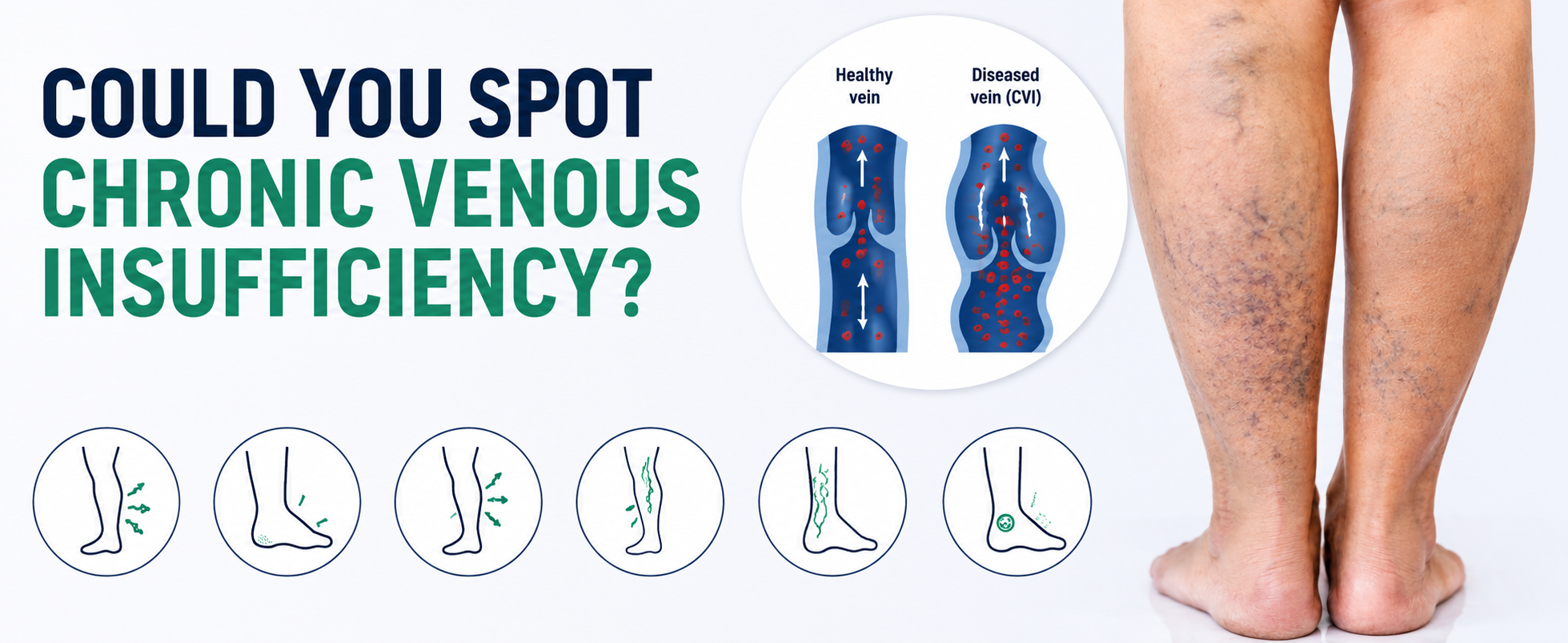
What is Chronic Venous insufficiency?
For a few people, the valves of their legs and feet veins get ruptured and do not function as
desired. This hinders the blood flow back to the heart and leads to swollen and enlarged veins
that often ache and cause itching on the skin.
The malfunctioning veins lead to blood pooling as the blood remains stagnant in the veins. The
patients also often have a constant heavy feeling in the affected area. This medical condition
called varicose veins, when left untreated for a long tenure becomes chronic and has other major
side effects on the overall health of the patient.
Chronic venous insufficiency forces the blood pressure in the legs to rise up to extreme levels
and also exponentially increases the chances of stasis ulcers.
Confused about treatment options? Our experts will guide you step by step.
What are the Root Causes of Chronic Venous Insufficiency?
There are multiple factors that lead to chronic venous insufficiency in the due course of time.
Let us become aware of the most common ones below: 1.A family history of blood clots, varicose veins or chronic venous
insufficiency 2.A known medical condition of blood clots or Deep Vein Thrombosis (DVT) 3.Being overweight or obese and having a sedentary lifestyle with a total lack
of physical
activity 4.Hormonal changes in the body 5.Suffering from high blood pressure 6.A habit of excessive smoking on a daily basis 7.Any form of damage during surgery or an accidental injury to the leg
Except for the genetic reasons of chronic venous insufficiency, most other causes of this
medical condition can be repaired by consuming a low-fat diet, performing mild exercises that
focus on the leg and the ankle, and avoiding to stand or sit for long tenures at a
stretch
Get Your First Doppler Scan FREE — Worth ₹4,500!
What are the Main Symptoms of Chronic Venous Insufficiency?
The biggest sign and the most prominent symptom of chronic venous insufficiency is the
appearance of the enlarged and bulging out bluish purple varicose veins.
There are, however, a few more easy to recognize symptoms that have been detailed below:
1.A feeling of heaviness and extreme tightness in the lower area of the one or
both legs 2.Severe swelling in the legs and feet, especially around the ankle 3.Cramping in the legs and acute pain in the feet 4.Increased pain during walking 5.Itching around the ankle and the affected area of legs and feet 6.Skin tan or skin discoloration leading the reddish-brown skin 7.Also, leg ulceration in some critical cases when treatment for varicose veins
is delayed
It is supremely important to pay close attention to your body and identify the above signs of
chronic venous insufficiency. If you notice either of the above symptoms, prioritize seeing a
vascular expert.
Can Avis Hospitals treat your Chronic Venous Insufficiency?
Yes! Avis Hospitals is a trusted medical institute for the most genuine treatment of your
vascular disorders. Based out of Hyderabad, Avis Hospitals has been catering to the requirements
of vascular experts for patients from many different parts of India.
The vascular department at Avis Hospitals is led by Dr. Rajah V Koppala. He is not only highly
qualified but also greatly experienced. In his over 24 years of medical career, he has
successfully treated patients with the most severe cases of vascular diseases.
Dr. Rajah V Koppala is a vascular expert with expertise in the
varicose veins. Whether you have early symptoms of varicose veins, have a history of blood clots
in the veins, have DVT and are planning to travel abroad, have been diagnosed with chronic
venous insufficiency or have an undiagnosed vein disorder, Dr. Rajah V Koppala will help you
with accurate diagnosis and bona fide treatment.
He always ensures that the patients are well informed of their medical condition and the
prescribed treatment. He also comforts the patients by answering their queries and making them
feel confident about their recovery. Do not compromise with your health by delaying the
treatment of your varicose veins, book a consultation with Dr. Rajah V Koppala today!
What to do next?
If you or someone you know has one or more of the above symptoms, you must not delay a medical
check-up with the vascular experts at Avis Hospitals. All doctors at Avis Hospitals are through
professionals, have years of experience, and believe in 100% customer satisfaction.
Avis Hospitals will not only guide you with the most genuine and authentic advise for your
health but also take the extra steps to ensure your well-being. Pledge to take care of your vein
health and book a timely treatment for your venous leg ulcers to prevent other medical
complications. Schedule an appointment with Avis Hospitals today!
For any unanswered questions, reach out to our support team via
email. We’ll respond as soon as possible to assist you.
For Enquiry
✉
info@avisvascularcentre.com
☎
+91 80089 49900
Why do venous skin ulcers usually appear near the ankle?
−
Venous skin ulcers commonly develop near the ankle because blood tends to pool in this area when leg veins fail to return blood efficiently to the heart. The increased pressure damages the skin and underlying tissues, making the ankle region especially vulnerable to ulcer formation.
How can I tell if a slow-healing wound is a venous leg ulcer?
+
A venous leg ulcer is usually a shallow wound with uneven edges, often surrounded by darkened, tight, or shiny skin. It heals very slowly and may be associated with leg swelling, heaviness, or skin discoloration rather than a clear injury.
Why do venous leg ulcers take so long to heal?
+
Poor blood circulation prevents enough oxygen and nutrients from reaching the affected skin. As long as blood pooling continues, the body struggles to repair the damaged tissue, which is why venous leg ulcers may take months—or longer—to heal.
Can venous leg ulcers come back after healing?
+
Yes. Venous leg ulcers have a high risk of recurrence if the underlying vein problem is not managed. Continuing preventive measures such as compression, leg elevation, regular walking, and lifestyle changes is essential even after the ulcer heals.
When should I seek medical care for a leg ulcer?
+
You should seek medical care if a leg wound does not heal within a few weeks, becomes painful, swollen, warm, or starts draining pus or foul-smelling fluid. Early evaluation helps prevent infection, worsening tissue damage, and long-term complications.