
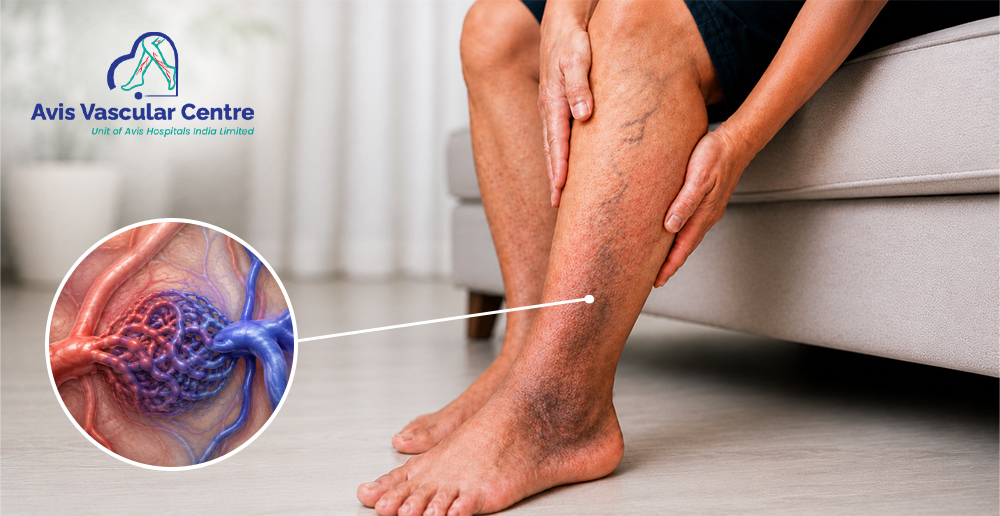
Arteriovenous malformation is a vascular condition in which arteries connect directly to veins without the normal network of capillaries in between. This abnormal connection disrupts normal blood flow, allowing high-pressure arterial blood to pass directly into veins, which are not designed to handle such pressure. Over time, this can strain blood vessels and surrounding tissues.
Some AVMs remain unnoticed for years, while others become apparent due to symptoms caused by altered blood circulation.
Understanding what varicose veins are helps patients recognise early symptoms and seek timely medical guidance. Early diagnosis prevents the condition from progressing and protects overall vein health.
Most arteriovenous malformations develop during early fetal development when blood vessels form abnormally. Instead of creating a normal capillary system, arteries and veins connect directly. In rare cases, AVMs may also develop after trauma or injury to blood vessels.
These causes result in abnormal circulation patterns that place stress on veins and surrounding tissues.
Risk factors for arteriovenous malformation are largely related to congenital and genetic influences. Unlike many vascular conditions, lifestyle factors play a limited role in AVM development.
Awareness of these risk factors supports early detection and appropriate monitoring.
Symptoms of arteriovenous malformation depend on the size, location, and blood flow pattern of the abnormal vessels. Some individuals remain symptom-free, while others experience progressive effects due to altered circulation.
Symptoms may gradually increase as blood flow through the malformation changes over time.
For any unanswered questions, reach out to our support team via email. We’ll respond as soon as possible to assist you.