
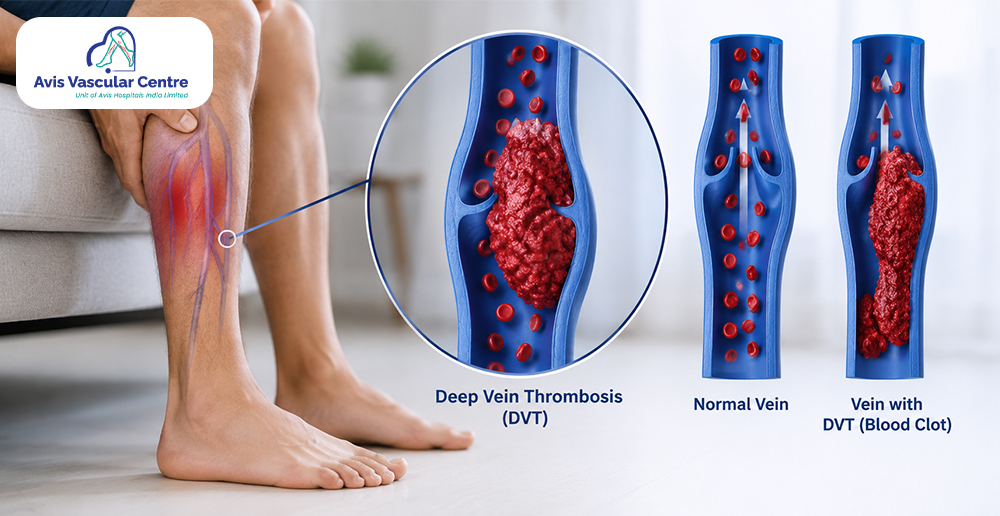
Deep vein thrombosis is a condition in which a blood clot forms within a deep vein, most commonly in the legs. This clot can partially or completely block blood flow, leading to pressure buildup and impaired circulation. DVT is considered a serious vascular condition because the clot may dislodge and travel to other parts of the body.
In many cases, DVT may go unnoticed initially, making awareness of its features important for early recognition
Understanding what varicose veins are helps patients recognise early symptoms and seek timely medical guidance. Early diagnosis prevents the condition from progressing and protects overall vein health.
Deep vein thrombosis occurs when blood flow slows down, becomes stagnant, or when the blood’s clotting tendency increases. Injury to the vein wall or prolonged immobility can disrupt normal circulation, allowing a clot to form within the vein.
These causes often act together, creating conditions that favour clot formation.
Certain individuals are more prone to developing DVT due to biological, medical, or situational factors. These factors increase the likelihood of clot formation but do not directly cause it on their own.
Identifying risk factors early allows closer monitoring and preventive planning.
Symptoms of DVT can vary widely. Some individuals experience noticeable discomfort, while others may have no symptoms until complications arise. When present, symptoms often develop in the affected limb.
Prompt recognition of these symptoms is important to reduce the risk of further complications.
For any unanswered questions, reach out to our support team via email. We’ll respond as soon as possible to assist you.