
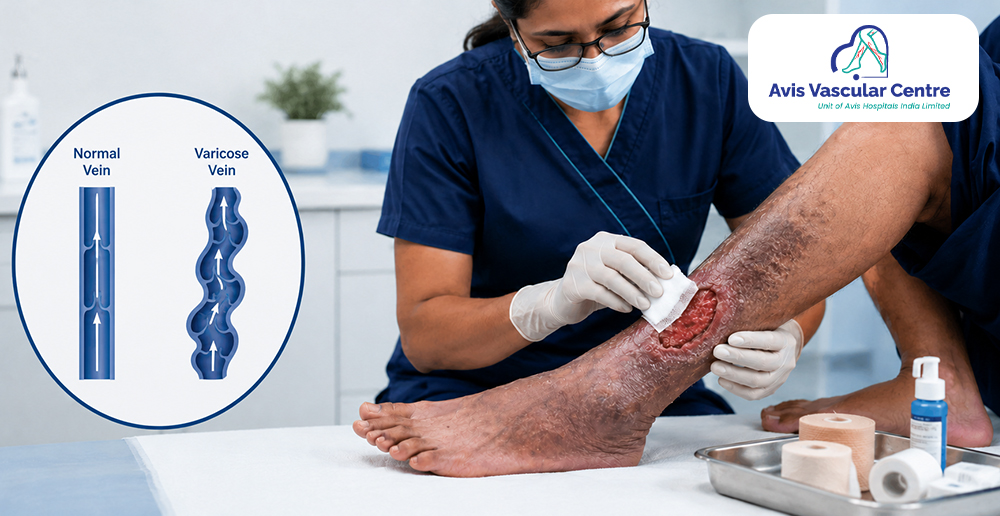
Leg ulcers are open, non-healing wounds that develop on the lower leg or around the ankle due to impaired blood circulation. They most commonly occur when veins in the legs fail to return blood efficiently to the heart, leading to increased pressure in the veins and reduced oxygen supply to the skin. Over time, this causes the skin to break down, resulting in a chronic wound that heals slowly.
Leg ulcers often persist without proper vascular management and may recur even after initial healing if the underlying cause is not addressed.
Understanding what varicose veins are helps patients recognise early symptoms and seek timely medical guidance. Early diagnosis prevents the condition from progressing and protects overall vein health.
Leg ulcers develop when prolonged circulation problems reduce blood flow to the skin and underlying tissues. In most cases, this is due to venous insufficiency, where blood pools in the leg veins instead of flowing upward. The increased pressure damages small blood vessels and skin tissue, eventually leading to ulcer formation.
These causes gradually weaken the skin’s ability to repair itself, making even minor injuries progress into long-standing ulcers.
Certain individuals are more likely to develop leg ulcers due to long-term circulation stress or underlying health conditions. While risk factors do not directly cause ulcers, they significantly increase susceptibility.
Recognising these risk factors early allows preventive strategies to be implemented before ulcers develop or recur.
Symptoms of leg ulcers extend beyond the wound itself and often include surrounding skin changes. These symptoms may worsen gradually and are often more noticeable after prolonged standing.
As symptoms progress, infection risk increases, making timely medical evaluation important.
For any unanswered questions, reach out to our support team via email. We’ll respond as soon as possible to assist you.