
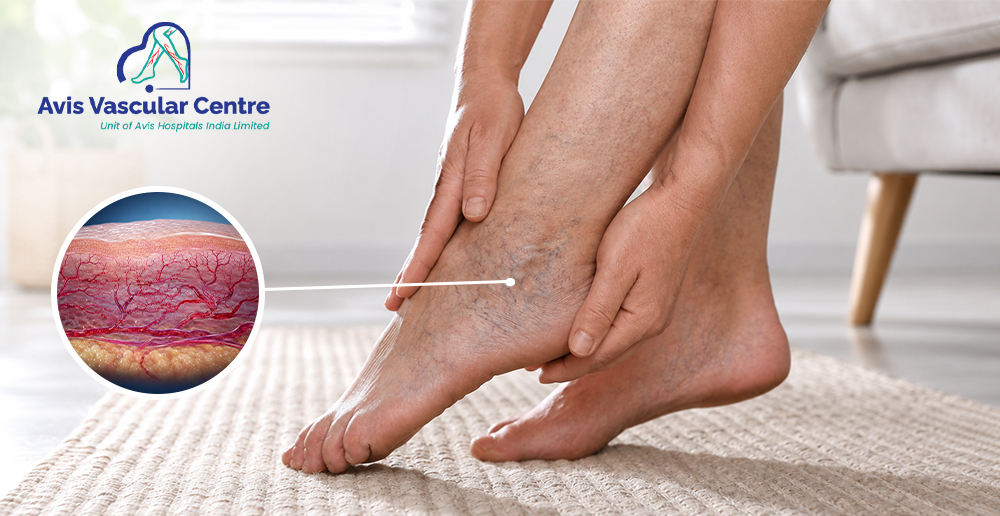
Spider veins are small, thin blood vessels that appear close to the surface of the skin and form web-like, branching patterns. They commonly appear red, blue, or purple and are most often seen on the legs and face. Spider veins develop when tiny surface veins become dilated due to increased pressure or weakened vessel walls, allowing them to become visible through the skin.
Spider veins are generally smaller than varicose veins and do not usually bulge, though they may increase in number over time.
Understanding what varicose veins are helps patients recognise early symptoms and seek timely medical guidance. Early diagnosis prevents the condition from progressing and protects overall vein health.
Spider veins form when small surface veins lose their ability to regulate blood flow efficiently. Increased pressure within these tiny vessels causes them to widen and become visible through the skin. Unlike deeper vein conditions, spider veins primarily involve superficial capillaries and venules.
These causes lead to gradual dilation of surface veins, resulting in the visible patterns associated with spider veins.
Certain individuals are more likely to develop spider veins due to genetic, hormonal, or environmental factors. While risk factors do not directly cause spider veins, they increase the likelihood of small vein dilation over time.
Recognising risk factors helps in early monitoring and preventive care.
Spider veins often develop gradually and may initially appear as a cosmetic concern before causing noticeable physical symptoms. In the early stages, individuals may observe fine red, blue, or purple lines on the skin surface without discomfort. As the condition progresses, these visible veins can be accompanied by sensations of heaviness or mild aching, especially after long periods of standing or sitting. Some individuals experience localized warmth, itching, or a subtle burning sensation around the affected area. Although spider veins are typically superficial, persistent symptoms may indicate underlying circulatory strain, particularly when discomfort worsens by the end of the day or during prolonged inactivity.
While many people experience spider veins without significant discomfort, the presence of recurring sensations such as heaviness or irritation may signal increased venous pressure. Monitoring symptoms helps in understanding progression and determining whether further vascular assessment may be required.
For any unanswered questions, reach out to our support team via email. We’ll respond as soon as possible to assist you.