WhatsApp

Uterine Fibroids: Causes, Risk Factors and Symptoms

Blog Image
What Are Uterine Fibroids?

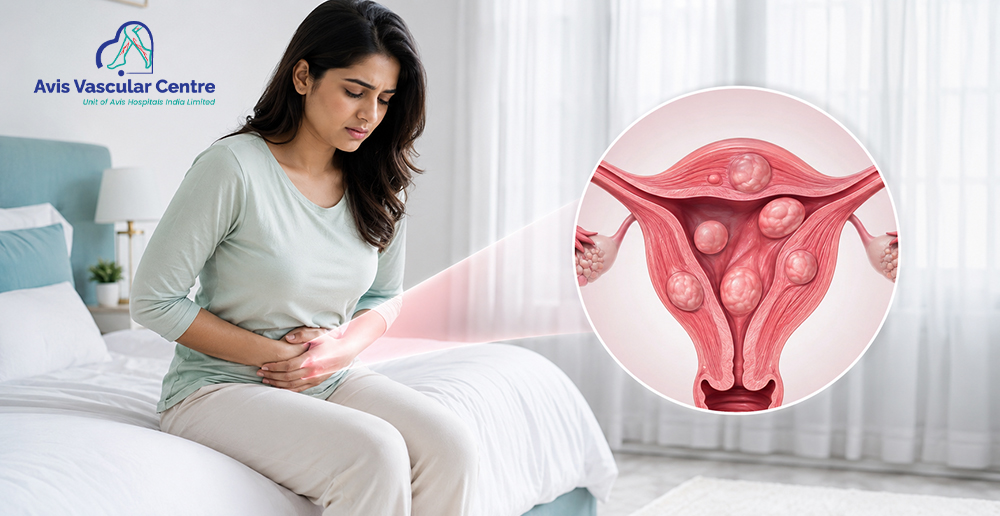
Uterine fibroids are non-cancerous growths that develop from the muscular wall of the uterus. They vary in size, number, and location and may grow within the uterine wall, project into the uterine cavity, or extend outward from the uterus. Fibroids are common during the reproductive years and may grow slowly or remain stable over time.

Common Characteristics of Uterine Fibroids Include:
  • Non-cancerous growths made of muscle and connective tissue
  • Can be single or multiple in number
  • Vary widely in size, from very small to large masses
  • Located in different layers of the uterus
  • May remain unnoticed for long periods

Many fibroids do not cause symptoms and are discovered incidentally during routine examinations or imaging.

Get Your First Dropper Scan FREE β€” Worth β‚Ή4,500!

Understanding what varicose veins are helps patients recognise early symptoms and seek timely medical guidance. Early diagnosis prevents the condition from progressing and protects overall vein health.

What Causes Uterine Fibroids?

The exact cause of uterine fibroids is not fully understood, but their development is strongly influenced by hormonal and genetic factors. Estrogen and progesterone, the hormones that regulate the menstrual cycle, are known to stimulate fibroid growth. Fibroids tend to grow during reproductive years and often shrink after menopause when hormone levels decline.

Major Causes of Uterine Fibroids Include:
  • Hormonal stimulation by estrogen and progesterone
  • Genetic changes in uterine muscle cells
  • Increased sensitivity of uterine tissue to hormones
  • Abnormal growth of smooth muscle cells

These factors contribute directly to the formation and growth of fibroids within the uterus.

Risk Factors of Uterine Fibroids

Certain individuals are more likely to develop uterine fibroids due to biological and reproductive factors. Risk factors increase the likelihood of fibroid formation but do not directly cause them.

Major Risk Factors of Uterine Fibroids Include:
  • Family history of fibroids
  • Reproductive age group
  • Early onset of menstruation
  • Hormonal imbalance

Understanding these risk factors allows early monitoring and timely management when symptoms develop.

Symptoms of Uterine Fibroids

Symptoms of uterine fibroids depend on their size, number, and location. While many individuals remain symptom-free, others may experience symptoms that gradually affect daily activities and menstrual health.

Common Symptoms of Uterine Fibroids Include:
  • Heavy or prolonged menstrual bleeding
  • Pelvic pressure or fullness
  • Lower abdominal discomfort
  • Frequent urination due to pressure on the bladder
  • Pain during menstruation

As fibroids enlarge, symptoms may become more pronounced, making early recognition important.

Frequently Asked Questions

For any unanswered questions, reach out to our support team via email. We’ll respond as soon as possible to assist you.

For Enquiry
βœ‰ info@avisvascularcentre.com
☎ +91 80089 49900

Are uterine fibroids cancerous in nature?

βˆ’
No, uterine fibroids are non-cancerous growths.

Can uterine fibroids occur without any symptoms?

+
Yes, many fibroids remain asymptomatic.

Do uterine fibroids always require treatment?

+
No, treatment depends on symptoms and fibroid characteristics.

Can fibroids grow larger over time?

+
Yes, fibroids may increase in size, especially during reproductive years.

Are uterine fibroids common?

+
Yes, they are very common among women of reproductive age.

Can fibroids affect menstrual cycles?

+
Yes, they may cause heavy or prolonged periods.

Ready to Take the Next
Step in Your Health Journey?

Book an appointment or contact our team today we’re here to help.