
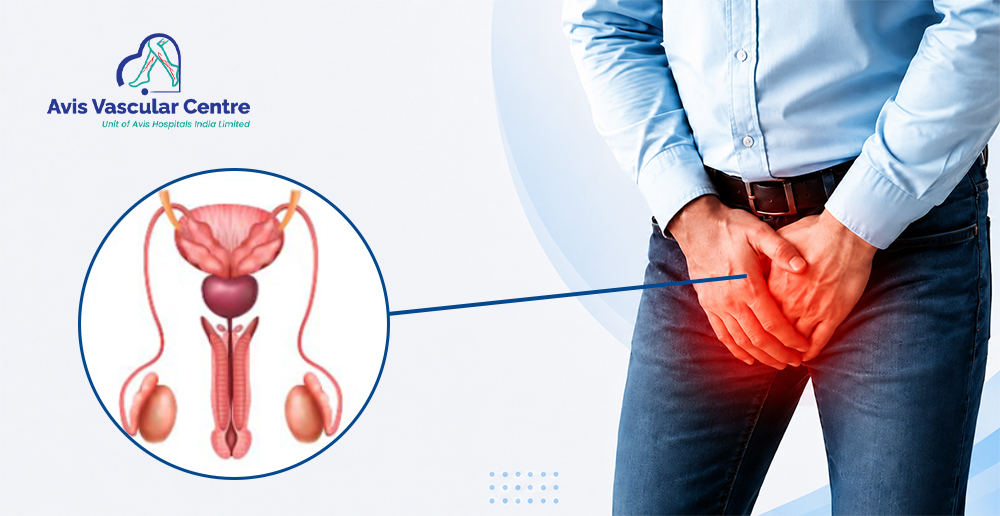
Varicocele is a condition in which the veins within the scrotum become enlarged due to impaired blood flow. It occurs when valves in the veins responsible for draining blood from the testicles do not function properly, allowing blood to collect and increase pressure within the veins. This leads to vein enlargement, similar in mechanism to varicose veins but occurring in a different anatomical region.
Varicocele may remain unnoticed in some individuals, while in others it becomes evident due to physical changes or discomfort, especially after prolonged standing
Understanding what varicose veins are helps patients recognise early symptoms and seek timely medical guidance. Early diagnosis prevents the condition from progressing and protects overall vein health.
Varicocele develops when the one-way valves within the testicular veins fail to regulate blood flow effectively. When these valves do not close as intended, blood flows backward and accumulates in the veins, leading to increased pressure and dilation. Anatomical factors in the venous drainage system also contribute to its higher occurrence on one side.
These causes directly affect venous circulation around the testicles and lead to gradual vein enlargement over time.
Varicocele is more likely to develop in certain individuals due to biological and developmental factors. While risk factors do not directly create the condition, they increase the likelihood of venous valve dysfunction and vein enlargement.
Understanding these risk factors helps in early identification and monitoring, especially during routine health evaluations.
Symptoms of varicocele vary from person to person. Some individuals remain symptom-free, while others experience physical discomfort or notice changes in the scrotal area. Symptoms may become more noticeable with physical activity or prolonged standing.
Early recognition of symptoms is important, particularly when varicocele affects testicular function or comfort.
For any unanswered questions, reach out to our support team via email. We’ll respond as soon as possible to assist you.