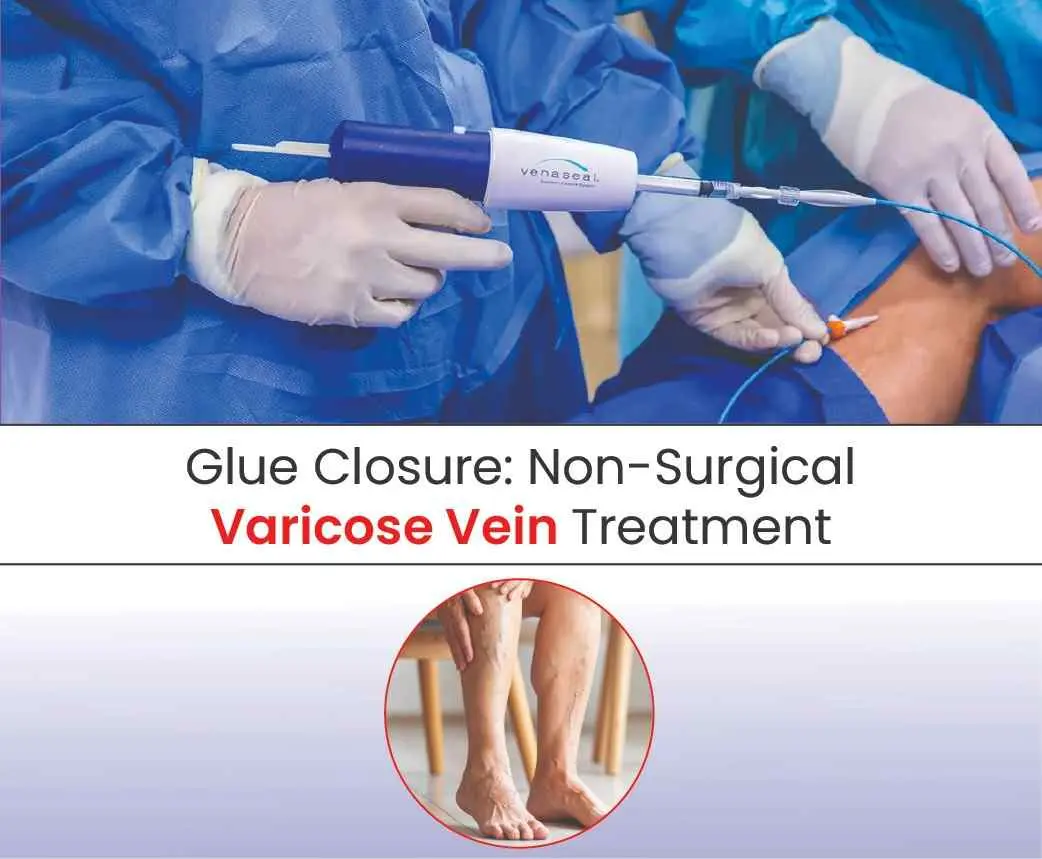
Varicose veins are a common condition affecting millions worldwide. Characterised by bulging,
twisted veins—typically in the legs—they result from faulty valves that allow blood to pool,
leading to heaviness, pain, and swelling. While traditional treatments often involved surgery or
heat-based procedures, today’s patients can benefit from a modern, non-surgical alternative:
glue-based vein closure.
This revolutionary treatment, widely known by its brand name VenaSeal®, uses a medical adhesive
to close off problem veins—offering a fast, minimally invasive, and virtually painless option
for relief.
Get Your First Doppler Scan FREE — Worth ₹4,500!
What is Glue-Based Closure?
Glue-based closure is a non-thermal, non-tumescent endovenous procedure that treats varicose
veins by sealing them shut with a medical-grade adhesive. The body then naturally reroutes blood
flow to healthy veins, and the sealed vein is gradually absorbed over time.
The most widely used and FDA-approved system for this technique is VenaSeal®, which uses a
specially formulated cyanoacrylate glue — a type of bio-compatible adhesive also used in medical
wound closures.
Confused about treatment options? Our experts will guide you step by step.
Step-by-Step: How the Procedure Works
Ultrasound Mapping
The vein specialist begins by using ultrasound imaging to locate the affected vein and plan the
precise treatment path. Catheter Insertion
A small catheter (a thin, flexible tube) is inserted into the vein through a tiny puncture in
the skin. No large incisions or stitches are needed. Adhesive Delivery
The medical glue is gently delivered into the vein through the catheter in precise doses. Manual
compression is applied at intervals to ensure the vein walls adhere together. Sealing the Vein
As the adhesive sets, the vein is sealed shut permanently. The catheter is removed, and a small
bandage is applied. That’s it—no general anaesthesia, no surgical recovery.
Why Patients Choose Glue-Based Closure
No Heat, No Nerve Damage
Unlike laser or radiofrequency ablation, this method doesn’t involve heat, eliminating the risk
of thermal injury to surrounding nerves or tissues. No Tumescent Anaesthesia Required
Traditional methods involve multiple injections of local anaesthetic around the vein. Glue
closure
avoids this altogether, making the experience much more comfortable. No Compression Stockings for Most
Many patients don’t need to wear compression garments post-procedure—making it especially
appealing
in warm climates or for busy lifestyles. Excellent Cosmetic Results
With no scarring, bruising, or pigmentation, patients enjoy clear skin and confidence in their
appearance
Who is It For?
Glue-based closure is ideal for individuals with chronic venous insufficiency or visible
varicose veins who want a non-surgical, low-risk option. It’s particularly suitable for patients
with low pain tolerance, active lifestyles, or concerns about scarring. However, proper
ultrasound evaluation and consultation with a vein specialist are essential to determine
candidacy.
Conclusion
Glue-based vein closure is a groundbreaking option in the field of varicose vein treatment. With
minimal discomfort, no downtime, and lasting results, it’s helping people reclaim their comfort
and confidence—without surgery.
If you’re ready to explore a safe, simple, and effective way to treat varicose veins, talk to a
certified vein specialist about whether glue-based closure like VenaSeal® is right for you.
For any unanswered questions, reach out to our support team via
email. We’ll respond as soon as possible to assist you.
For Enquiry
✉
info@avisvascularcentre.com
☎
+ 91 80089 49900
How is glue-based vein closure different from traditional varicose vein surgery?
−
Glue-based vein closure does not involve surgical cuts, stitches, or removal of veins. Instead, a
medical adhesive is delivered through a thin catheter to seal the faulty vein from inside.
Traditional surgery requires incisions, hospital admission, and longer recovery, whereas glue
closure is a walk-in, walk-out procedure with minimal disruption to daily life.
Does sealing a vein with glue affect overall blood circulation in the legs?
+
No, sealing the diseased vein actually improves circulation. Varicose veins carry blood
inefficiently due to faulty valves. Once the problematic vein is closed, blood is naturally
redirected to healthier veins that function properly, reducing pooling, pressure, and symptoms like
heaviness and swelling.
Is the glue used inside the vein safe to remain in the body long term?
+
Yes, the adhesive used in glue-based closure is a medical-grade, biocompatible material that has
been safely used in healthcare for many years, including wound closure and surgical applications.
Over time, the treated vein shrinks and is absorbed by the body, while the adhesive remains inert
and does not circulate through the bloodstream.
Will I feel the glue inside my vein after the procedure?
+
Most patients do not feel the glue at all once the procedure is completed. Some may experience mild
tightness or tenderness along the treated vein for a few days, which is temporary and usually
resolves without intervention. Persistent discomfort is uncommon.
How soon can I walk, travel, or return to work after glue-based closure?
+
Walking is encouraged immediately after the procedure, and most patients return to routine
activities the same day. Desk work, household tasks, and short travel are usually possible within
hours. This makes glue-based closure particularly convenient for working professionals and active
individuals.