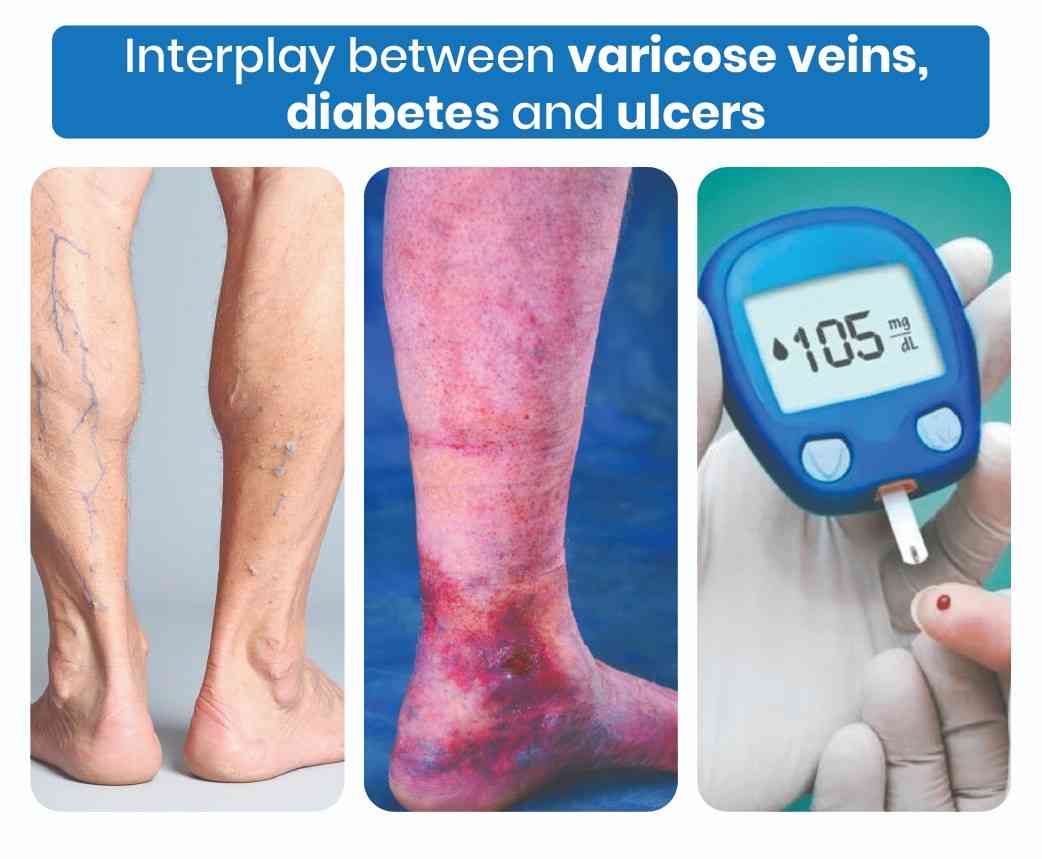
Interplay between varicose veins, diabetes, and ulcers
18-October-2025Category: Vascular Diseases
Varicose veins, often regarded as a cosmetic issue, can profoundly impact individuals,
particularly those with concurrent medical conditions like diabetes. The presence of leg ulcers
that resist healing, coupled with leg swelling and discomfort, may signify complications
stemming from varicose veins. This intricate relationship warrants a deeper exploration into the
mechanisms by which varicose veins exacerbate ulcers and how diabetes intertwines with these
vascular concerns.
Varicose Veins and Leg Ulcers: Mechanisms of Aggravation
Varicose veins arise from weakened or damaged valves within the veins, leading to venous
insufficiency and impaired blood flow. Over time, this venous dysfunction culminates in elevated
pressure within the veins, resulting in various manifestations, including:
Chronic Venous Insufficiency (CVI): The compromised venous circulation associated with varicose
veins contributes to CVI, characterized by inadequate blood return to the heart. CVI fosters a
hostile environment conducive to ulcer formation, particularly in the lower extremities.
Circulatory Disturbances: Varicose veins disrupt the circulation within the skin, compromising
wound healing mechanisms. Prolonged venous hypertension and capillary leakage aggravate tissue
damage, rendering ulcers refractory to conventional treatment approaches.
Inflammatory Cascade: Venous stasis induced by varicose veins triggers an inflammatory response,
perpetuating tissue damage and impeding the reparative processes crucial for ulcer resolution.
Chronic inflammation fosters a protracted ulcerative state, further complicating management
strategies.
Get Your First Doppler Scan FREE — Worth ₹4,500!
The Diabetic Factor: Unraveling the Connection
Individuals with diabetes face an augmented risk of vascular complications due to microvascular
and macrovascular pathology inherent to the disease. The interplay between diabetes and varicose
veins underscores several key points:
Vascular Problems Get Worse with Diabetes: Diabetes makes the issues caused by varicose veins
worse. It increases the chances of having ulcers on your legs and makes it harder for wounds to
heal. Diabetes damages the tiny blood vessels and nerves in your legs, making the problem even
worse.
Immune System Doesn’t Work Right: Diabetes messes up your immune system, which affects how your
body fights off infections. This makes it harder for wounds to heal properly. When combined with
varicose veins, it creates more inflammation and makes healing even more difficult.
Nerve Damage Makes Things Tough: Diabetes can damage the nerves in your legs, leading to
problems with feeling and moving your legs properly. This makes it harder to get blood flowing
well in your legs, which can worsen the issues caused by varicose veins. Managing these nerve
problems alongside varicose veins can be challenging and may require different specialists to
help.
Confused about treatment options? Our experts will guide you step by step.
Strategic Interventions: Addressing Varicose Veins and Diabetes Complications
Effective management of varicose veins and associated ulcers in diabetic individuals
necessitates a comprehensive therapeutic approach tailored to address the intricate interplay
between vascular dysfunction and metabolic derangements. Key interventions include:
Compression Therapy: Utilizing graduated compression stockings to mitigate venous hypertension
and facilitate blood return, thereby ameliorating ulceration and enhancing wound healing.
Diabetes Optimization: Rigorous glycemic control and meticulous foot care are paramount in
mitigating diabetic complications and fostering ulcer healing. Close collaboration between
vascular specialists and endocrinologists is imperative to optimize diabetes management and
mitigate vascular sequelae.
Varicose veins represent more than just a cosmetic concern, posing a significant risk for the
development and exacerbation of leg ulcers, particularly in individuals with diabetes.
Understanding the intricate mechanisms by which varicose veins potentiate ulcerative burden and
intertwine with diabetic complications is paramount in formulating effective therapeutic
strategies.
By addressing varicose veins and optimizing diabetes management through a multidisciplinary
approach, healthcare providers can mitigate ulcerative morbidity and foster optimal vascular
health in affected individuals.
Get Your First Doppler Scan FREE — Worth ₹4,500!
Tags: diabetes and ulcers, interplay between varicose veins, varicose diseases, varicose
treatment, varicose veins, varicose veins diabetes and ulcers, varicose veins treatment, vein
treatments, venous diseases, venous insufficiency
For any unanswered questions, reach out to our support team via
email. We’ll respond as soon as possible to assist you.
For Enquiry
✉
info@avisvascularcentre.com
☎
+91 80089 49900
Can varicose veins cause leg ulcers to worsen?
−
Yes. Varicose veins lead to poor blood circulation and increased pressure in the leg veins. This
creates an environment where skin tissues do not receive enough oxygen and nutrients, making ulcers
more likely to form and harder to heal.
Why do leg ulcers heal slowly in people with varicose veins?
+
Varicose veins cause venous insufficiency, which disrupts normal blood flow in the legs. This
results in chronic inflammation, fluid leakage into tissues, and impaired healing, making ulcers
persistent and difficult to treat.
How does diabetes make varicose vein–related ulcers more severe?
+
Diabetes damages small blood vessels and nerves, reduces immune response, and slows wound healing.
When combined with varicose veins, these effects significantly increase the risk of non-healing leg
ulcers and infections.
What role does nerve damage in diabetes play in leg ulcer formation?
+
Diabetic nerve damage reduces sensation and muscle function in the legs. This impairs circulation
and delays detection of wounds, allowing ulcers related to varicose veins to worsen before treatment
begins.
Can treating varicose veins help diabetic leg ulcers heal?
+
Yes. Treating varicose veins improves blood flow, reduces venous pressure, and lowers inflammation.
When combined with proper diabetes control and wound care, it significantly improves ulcer healing
and reduces recurrence.