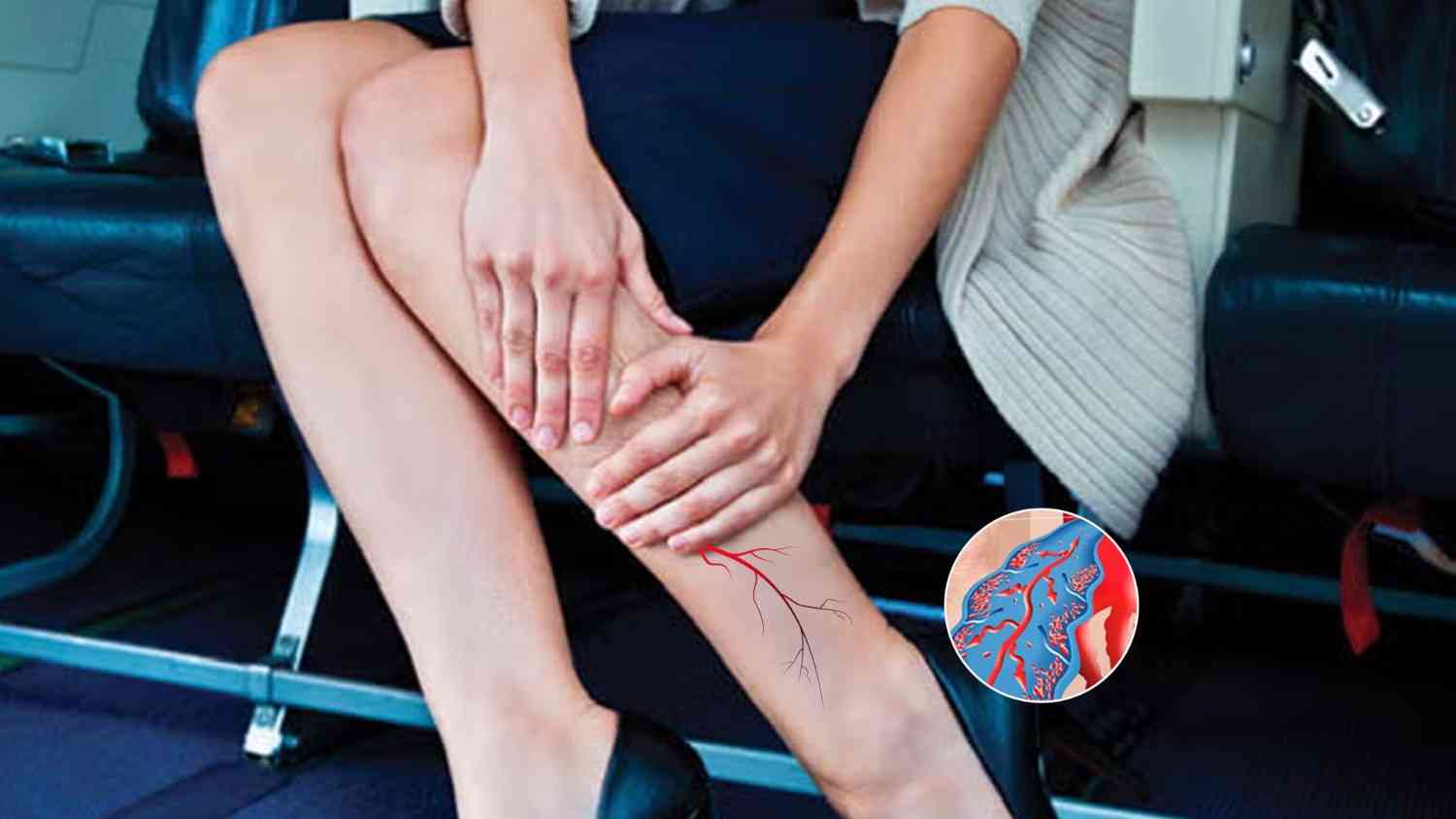
Blog > Preventions and Tips > Keep Your Veins Safe from Deep Vein Thrombosis While Travel
Is the fear of blood clots getting in the way of your travel plans?
Deep Vein Thrombosis
(DVT) is a common cause of hospitalization for patients over 60 years of
age. A health scare can completely ruin your vacation and you surely do not want that. If you
suffer from DVT or have a past history of blood clots in your leg and feet veins, it is best to
take all precautions to avoid an emergency situation while travelling
What are Venous Ulcers?
Patients who complain of varicose veins are at an
alarmingly high risk of venous ulcers. The
restricted blood flow in the varicose veins contributes to blood pooling which further causes
additional pressure on the veins. This, in turn, is known to cause the skin tissue around the
damaged vein to crack open and form an open wound.
These open wounds that may or may not bleed are called venous ulcers. The patients experience a
feeling of heaviness along with a sensation of tingling and itching in the affected area. Also,
the colour of the skin around the ulcer changes to dark red, brown, or purple. In the absence of
treatment, as the blood continues to pool, the patients may also experience the skin around the
wound turning thicker.
As and when the ulcer breaks open, there can be seen a shallow red-coloured wound that is
covered by a yellow tissue. The skin surrounding the ulcer becomes tight, has a shiny look, and
is warm to touch. If there is an infection in the ulcer, you will notice a strong foul smell and
pus as well.
Introduction – What is DVT?
DVT is the medical term for what is commonly known as a blood clot. These blood clots occur deep
inside the large veins that are responsible for carrying the blood from the legs and feet back
to the heart.
These blood clots severely restrict the blood flow and damage the one-way valves in the affected
veins. The restricted blood tends to pool in the affected veins which further results in the
surrounding tissues being filled with fluids. These tissues become irritated and patients
complain of unbearable pain.
This uncomfortable feeling often becomes dangerous when the blood clot travels up the heart and
reaches the vessels that feed the lungs. Referred to as Pulmonary
Embolism, it is a
life-threatening disorder that makes it difficult for the lungs to supply oxygen to the
bloodstream thus leading to difficulty in breathing.
Pregnant women, people over 60 years of age, overweight and obese people, and those suffering
from cancer are commonly affected by DVT. Also, for people, who have lower levels of physical
activity and tend to remain immobile for extended durations, a travel expedition can trigger
blood clot formation and thus lead to DVT.
How to Prevent DVT?
The good news is that DVT can be prevented. The best cure is to remain mobile at all times.
Follow the below-mentioned simple tips and enjoy a hassle-free trip to your favourite
destination:
If you have a long flight, the limited leg space in the airplane seat can be suffocating. Ensure
you do not keep anything on the floor and have enough space for your legs. Try to get up from
your seat and walk up and down the aisle once every hour. You can walk or perform mild exercises
in between the connecting flights as well.
If you are travelling long distances via road, it is advisable to get down once every 3-4 hours
and stretch your legs. You must also get down if you seem to have got stuck in a heavy traffic
jam.
If you are at a place where you can not get up, ensure to exercise while sitting. Move your legs
and feet as it will improve the blood circulation in your calves. Flex your ankles in the action
you do when you press the car accelerator. This is recommended for 20-30 times in an hour.
Consult your doctor about compression stockings. These are support stockings that are tight near
the ankle and lose around the knee and thighs. They have been proven to prevent blood pooling by
helping the veins to move the blood from the leg veins up to the heart.
Drink sufficient amounts of water to stay hydrated as that avoids the blood from thickening.
Avoid coffee and alcohol as they dehydrate the body and decrease the blood volume thus
increasing the chances of DVT.
You can also ask your doctor for some blood-thinning medicines if you have a medical history of
blood clots and are about to undertake an expedition.
Avoid wearing tight clothes around the waist as they are known to restrict the blood flow.
Do not smoke cigarette or consume tobacco.
Do not sit with crossed legs.
Conclusion
DVT is dangerous but can be prevented by being active during travel. No matter the place and
time, always find the means to exercise your legs and feet. If you have a previous case of DVT,
you are at a greater risk than others, but consulting your doctor before a trip can definitely
reduce the risks.
Dr. Rajah V Koppala
is a vascular surgeon and radiologist with 24 years of extensive experience.
If you suffer from DVT or just want to be cautious about your health, schedule an appointment
with Dr. Rajah V Koppala at Avis Vascular Centre for a detailed analysis of your leg and feet
vein health.