Blog > Vascular Diseases > Post thrombotic Syndrome
Post thrombotic Syndrome
18-October-2025Category: Vascular Diseases
Postthrombotic Syndrome (PTS) is a chronic condition that develops in some individuals after
experiencing deep vein thrombosis (DVT), where a blood clot forms in the deep veins, most
commonly in the legs. When a DVT damages the valves inside the veins, it disrupts normal blood
flow, leading to long-term complications such as chronic venous insufficiency. This results in
swelling, pain, and even skin ulcers, severely affecting the patient’s quality of life.
Understanding PTS, its potential complications, and the advanced interventional treatments
available is crucial for managing the condition effectively.
What is Post thrombotic Syndrome?
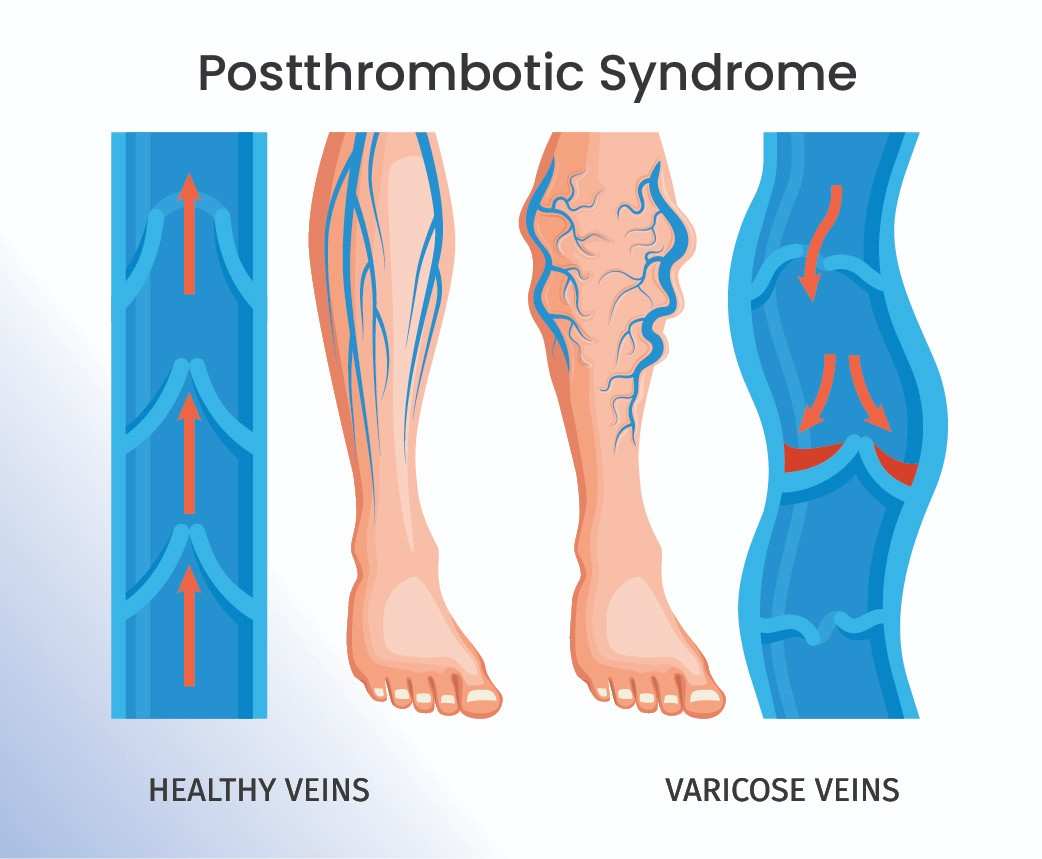
PTS occurs when the veins’ one-way valves are damaged or destroyed by a DVT, causing blood to
pool in the legs. The backflow of blood increases pressure in the veins, leading to swelling and
discomfort. Over time, the impaired circulation causes further complications, such as varicose
veins and ulcers. Symptoms typically manifest within 6 months to 2 years after a DVT episode,
and they can vary from mild to severe.
Get Your First Doppler Scan FREE — Worth ₹4,500!
Symptoms of Post thrombotic Syndrome
Patients with PTS may experience:
Chronic pain and heaviness in the affected leg, especially after prolonged standing or walking.
Swelling (edema) of the leg or ankle.
Skin discoloration or darkening, particularly around the ankles.
Development of varicose veins due to increased pressure in the superficial veins.
Slow-healing or non-healing venous ulcers, which may occur in severe cases.
These symptoms can have a profound effect on mobility and daily life, particularly if left
untreated.
Complications of Post thrombotic Syndrome
One of the most serious complications of PTS is the development of venous ulcers. These are
slow-healing wounds typically found around the ankles and are prone to infections. Venous ulcers
can be painful, and treating them requires dedicated medical care. PTS also increases the risk
of recurrent DVT, which could further damage veins and lead to more complications like pulmonary
embolism (PE).
The chronic nature of PTS can lead to reduced mobility, pain, and emotional stress, as patients
struggle to cope with persistent symptoms. This makes early and effective treatment essential.
Confused about treatment options? Our experts will guide you step by step.
Interventional Treatments for Post thrombotic Syndrome
Several minimally invasive treatments are available for PTS, focusing on improving circulation,
reducing symptoms, and preventing complications such as venous ulcers. These advanced therapies
offer significant relief without the need for extensive surgery.
1. Endovenous Laser Therapy (EVLT)
EVLT is a highly effective, minimally invasive procedure used to treat varicose veins and venous
insufficiency in PTS patients. During this procedure, a laser fiber is inserted into the
affected vein, and heat energy is used to seal off the damaged vein, rerouting blood flow
through healthier veins. This treatment significantly reduces pain and swelling, and also
prevents the progression of PTS-related venous insufficiency.
2. Sclerotherapy
Sclerotherapy is a common and effective treatment for varicose veins associated with PTS. A
chemical solution is injected into the damaged vein, causing it to close and eventually be
absorbed by the body. Blood is naturally redirected to healthy veins, improving circulation.
Sclerotherapy is especially effective in treating smaller veins that have become damaged due to
PTS, reducing discomfort and the appearance of varicose veins.
3. Angioplasty and Stenting
When a vein is narrowed or blocked due to scarring from a previous DVT, angioplasty may be used
to widen the vein. A small balloon is inserted into the affected vein and inflated to improve
blood flow. In some cases, a stent (a tiny mesh tube) is placed to keep the vein open. This
treatment is highly effective for improving circulation in veins that have been significantly
narrowed by DVT damage.
4. Venous Ablation
In some cases, venous ablation may be used to treat chronic venous insufficiency in PTS
patients. This procedure uses heat from either radiofrequency or laser to close the damaged
vein. Venous ablation is minimally invasive and helps in reducing the symptoms of PTS, such as
swelling, pain, and leg heaviness.
5.Compression Therapy
Compression stockings are a non-invasive but vital part of managing PTS. By applying pressure to
the legs, they help improve blood flow, reduce swelling, and alleviate discomfort. While
compression therapy isn’t interventional in the surgical sense, it’s a key part of preventing
further complications in PTS patients, especially following other treatments like EVLT or
sclerotherapy.
Get Your First Doppler Scan FREE — Worth ₹4,500!
Post thrombotic Syndrome can be a debilitating condition if left untreated, but with the right
interventional treatments, patients can achieve significant relief from symptoms like pain,
swelling, and venous ulcers. Early diagnosis and intervention are essential to preventing
long-term complications and improving the quality of life for patients suffering from this
chronic condition.
Tags: Post thrombotic syndrome, Postthrombotic Syndrome, Postthrombotic Syndrome treatment,
Treatment for post thrombotic
For any unanswered questions, reach out to our support team via
email. We’ll respond as soon as possible to assist you.
For Enquiry
✉
info@avisvascularcentre.com
☎
+91 80089 49900
How long after DVT can Post-thrombotic Syndrome develop?
−
Post-thrombotic Syndrome usually develops between 6 months and 2 years after a deep vein thrombosis.
Symptoms may appear gradually and worsen over time if the damaged veins are not properly managed.
Is Post-thrombotic Syndrome a permanent condition?
+
PTS is a chronic condition, but its symptoms can be effectively controlled. With timely treatment,
lifestyle measures, and modern interventional procedures, many patients experience significant
improvement and are able to maintain a good quality of life.
Why do some people get PTS after DVT while others don’t?
+
PTS develops when a DVT causes permanent damage to vein valves, leading to poor blood flow. The risk
is higher in people with large or recurrent clots, delayed treatment, obesity, prolonged inactivity,
or inadequate compression therapy after DVT.
Can Post-thrombotic Syndrome lead to leg ulcers?
+
Yes. One of the most serious complications of PTS is venous leg ulcers, especially around the ankle.
These ulcers occur due to prolonged high pressure in the veins and are slow to heal without proper
medical treatment.
Are minimally invasive procedures effective for treating PTS?
+
Yes. Procedures such as venous ablation, sclerotherapy, and angioplasty
with stenting can significantly improve blood flow, reduce swelling and pain, and prevent
complications when used in appropriately selected patients.