Blog > Prevention and Tips > Serena Williams and Her Experience with Pulmonary Embolism
What complications arouse during Child Birth?
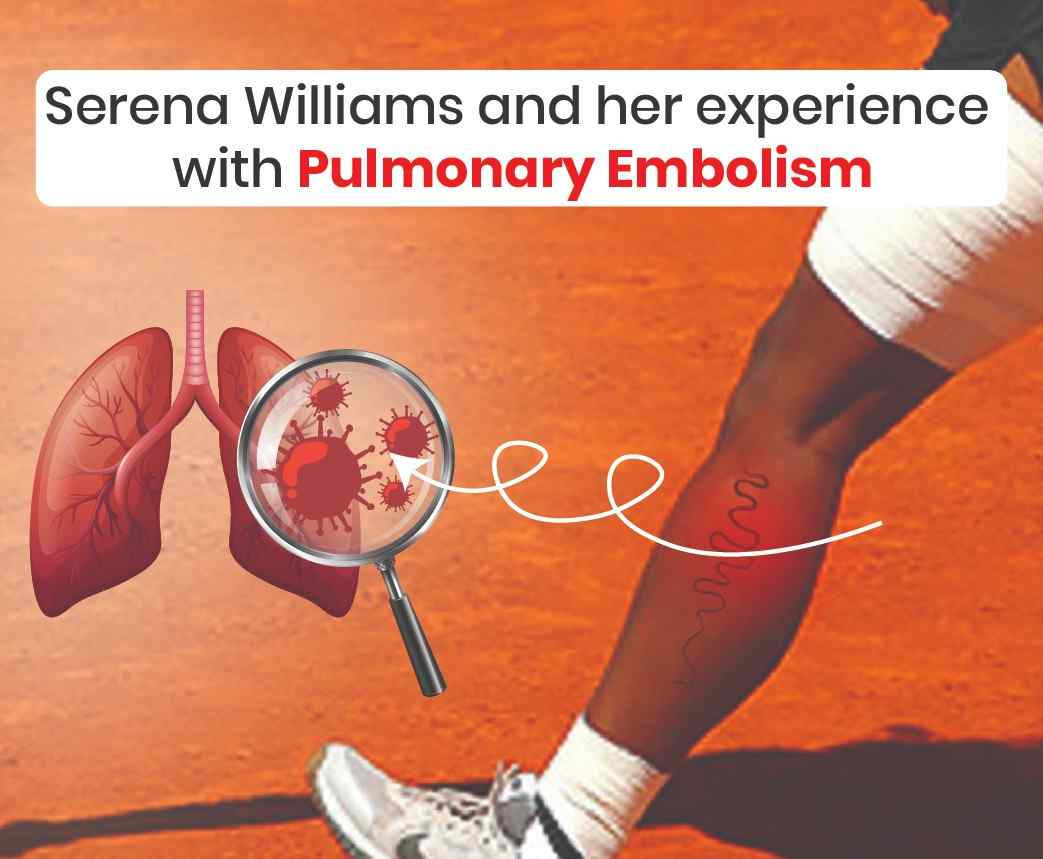
Tennis sensation Serena Williams has revealed in her interview with Vogue that she experienced
the major health complication called pulmonary embolism shortly after giving birth to her baby
in September 2017.
Serena Williams has had a medical history of blood clots in the deep veins (DVT i.e. Deep Vein
Thrombosis ) and was prescribed blood thinners (anti-coagulants) to prevent abnormal blood
clotting.
Due to an emergency C-Section surgery recommendation for delivery, Serena was put off her daily
dosage of blood thinners so as to avoid uncontrolled blood loss. This is the general medical
advice before any surgical treatment and not just caesarean delivery.
Although the childbirth procedure went well, she experienced difficulties in breathing while
recovering from the C-Section surgery. It was due to her awareness about the symptoms and her
past experience with the disorder, she immediately realized that it was an incidence of
pulmonary embolism.
Pulmonary embolism is a health scare caused due to the presence of blood clots in the lungs.
This condition arises when the blood clots in the deep veins from the other parts of the body
break free and travel to the lungs thus limiting the oxygen supply to the heart and eventually
causing death.
Serena asked the doctors to conduct a CT scan of her lungs to check for blood clots. Doctors
conducted an ultrasound scan of her legs followed by a CT scan and confirmed the presence of
numerous small potentially life-threatening blood clots in her lungs.
Fortunately, the doctors were able to treat Serena’s embolism on time by putting her on
life-saving blood-thinner drugs but these medications had side-effects on the faster healing of
her C-Section wounds. Also, pulmonary embolism led to extreme coughing spells that forced her
C-Section wounds to open up.
While trying to fix that through a surgical procedure, the doctors noticed a mass of clotted
blood (hematoma) in her abdomen. Doctors had to then insert a filter in her major vein to
prevent more blood clots from travelling to the lungs and heart.
Why do Pregnant women get Blood Clots?
It comes as a surprise to many that pulmonary embolism is the third most common form of
cardiovascular disorder after heart attack and stroke. It is, however, known that women are at a
greater risk of blood clots during pregnancy and shortly after childbirth. This risk is even
higher for women like Serena Williams who have a medical history of blood clots.
Studies have cited that a pregnant woman is at least 4 to 5 times more probable of having a
blood clot compared to when she is not pregnant. Every 1 or 2 out of 1000 pregnant women
experience blood clots. Also, women who deliver via C-Section are roughly four times more likely
to develop blood clots as compared to their counterparts who give birth through the vagina.
Let us understand what increases the likelihood of blood clots in women during pregnancy and
after delivery:
1. Hormonal changes during pregnancy promote the clotting of blood.
2. As the baby grows in size, the veins of the uterus and pelvic region get compressed. This leads
to poor blood flow and thus increases the chances of blood clot formation.
3. The increased size of the uterus causes additional pressure on the veins in the pelvic region
which slows down the blood flow.
4. In late pregnancy, women are not able to move around for long periods and have poor physical
activity levels which downgrade the blood flow in the legs and is the leading cause of blood
clot formation in deep veins.
All the above-listed factors contribute to the development of blood clots in pregnant women and
women remain to be at high risk for a few weeks even after childbirth as it takes time for the
uterus to reduce in size and for the levels of the hormones to come back to usual. All pregnant
women must keep a check for any early signs and symptoms of blood clots such as pain or swelling
in the legs.
Like any other surgical procedure, a caesarean procedure also increases the probability of blood
clots. Women who have had blood clots in the past must continue their regime of blood-thinners
and anti-coagulants to avoid clotting during pregnancy. It is also suggested to use inflatable
compression devices on a woman’s legs during the caesarean procedure.
If you are pregnant and have a medical history of blood clots, it is best to seek medical advice
from a vascular expert along with your routine check-ups with an OB-Gynae healthcare
practitioner. Dr. Rajah V Koppala is a highly qualified and thoroughly trained Vascular and Interventional Radiologist
and advanced laparoscopic surgeon. He is the best vascular expert for medical assistance for
blood clots during pregnancy and after delivery.
With the in-house medical set-up of Doppler ultrasound scan and advanced laser treatment
equipment along with a cashless Mediclaim facility for all treatment procedures, Avis Vascular
Centre tops the list of the best medical institutes for the cure of varicose veins, blood clots
in deep veins, and pulmonary embolism. Schedule your appointment with the distinguished vascular
expert Dr. Rajah V Koppala today!
Tips for Preventing VTE
1. Stay Active
Regular physical activity is crucial in preventing VTE. Exercise helps maintain healthy blood
circulation and prevents the blood from pooling and clotting. Aim for at least 30 minutes of
moderate exercise most days of the week. Activities like walking, cycling, and swimming are
excellent choices.
2. Avoid Prolonged Immobility
Prolonged immobility, such as sitting for long periods during travel or bed rest after surgery,
increases the risk of VTE. If you are traveling for extended periods, try to stand up, stretch,
and move around every hour. For those on bed rest, perform leg exercises and change positions
frequently to keep the blood flowing.
3. Maintain a Healthy Weight
Being overweight or obese can increase the risk of VTE. Maintaining a healthy weight through a
balanced diet and regular exercise can reduce this risk. Focus on consuming a diet rich in
fruits, vegetables, whole grains, lean proteins, and healthy fats.
4. Stay Hydrated
Dehydration can make the blood thicker and more prone to clotting. Drink plenty of water
throughout the day to keep your blood properly hydrated and flowing smoothly.
5. Wear Compression Stockings
Compression stockings can help improve blood flow in the legs and reduce the risk of DVT. These
specially designed stockings apply pressure to the legs, helping the veins and muscles move
blood more efficiently. They are especially useful during long flights or for individuals who
are bedridden.