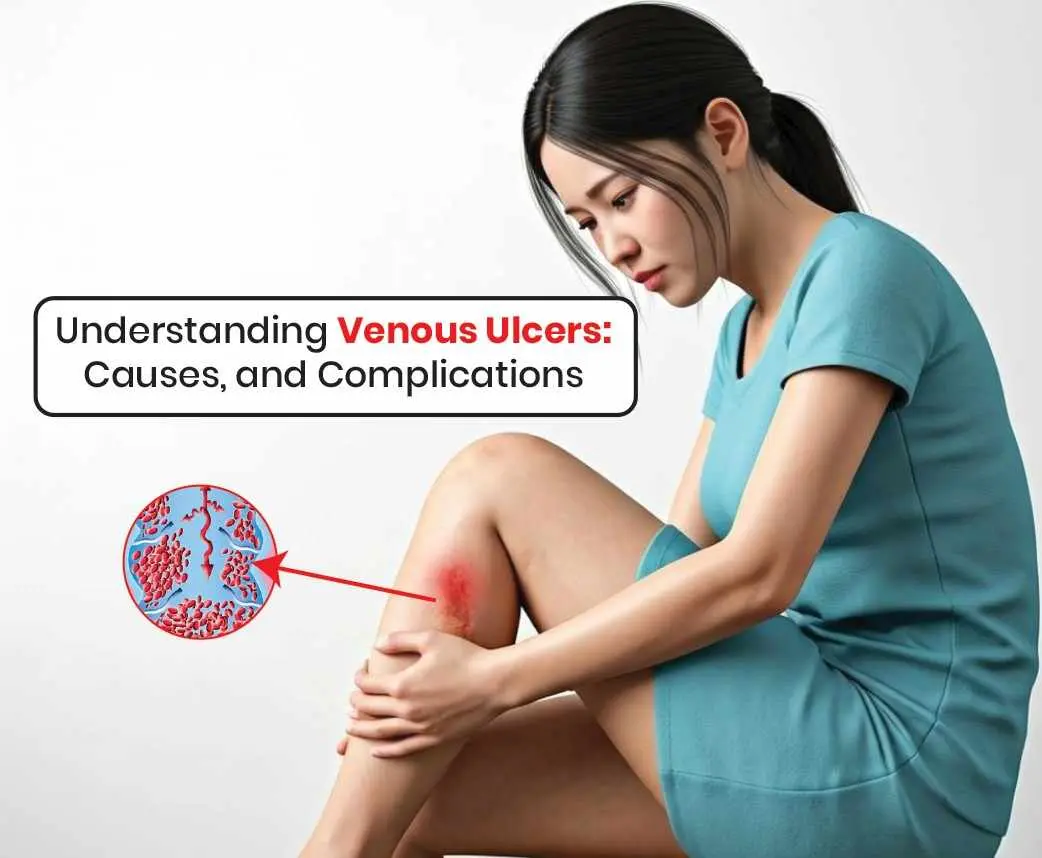
Blog > Vascular Diseases > Understanding Venous Ulcers Causes and Complications
Understanding Venous Ulcers Causes and Complications
18-October-2025Category: Vascular Diseases
Venous ulcers, also known as venous stasis ulcers or varicose ulcers, are wounds that occur on
the lower legs due to poor circulation of blood in the veins. These ulcers can be painful, slow
to heal, and significantly affect a person’s quality of life. In this blog, we’ll explore the
causes and complications of venous ulcers, discuss the impact of smoking on the condition, and
delve into how interventional treatments can help patients.
Get Your First Doppler Scan FREE — Worth ₹4,500!
How are Venous Ulcers formed?
Venous ulcers typically develop when there is a malfunction in the valves of the veins in the
legs, leading to a condition called venous insufficiency. Normally, these valves help prevent
blood from flowing backward, but when they fail, blood pools in the veins, causing increased
pressure. Over time, this pressure can damage the surrounding tissues, resulting in the
formation of ulcers.
Confused about treatment options? Our experts will guide you step by step.
Common risk factors for venous ulcers include:
Varicose Veins: Enlarged, twisted veins near the surface of the skin. Obesity: Excess weight puts added pressure on the veins. Sedentary Lifestyle: Lack of physical activity can impair circulation. History of Deep Vein Thrombosis (DVT): Blood clots in the deep veins of the
legs. Age: Venous ulcers are more common in older individuals.
Family History:Genetics may predispose some individuals to venous
insufficiency.
Get Your First Doppler Scan FREE — Worth ₹4,500!
Complications of Venous Ulcers:
Venous ulcers can lead to various complications, including:
Infection: Open wounds increase the risk of bacterial infection, which can lead
to cellulitis or even sepsis if left untreated. Pain and Discomfort:Ulcers can cause significant pain, especially when walking
or standing. Reduced Mobility:Pain and discomfort may limit mobility, affecting daily
activities and quality of life. Delayed Healing:Poor circulation and underlying vein issues can impede the
healing process, leading to chronic wounds.
Is there an Impact of Smoking on Ulcers?
Smoking is known to have detrimental effects on cardiovascular health, including impairing blood
circulation. Individuals who smoke are at higher risk of developing venous ulcers and
experiencing complications. Smoking restricts blood flow and decreases oxygen levels in the
blood, exacerbating the already compromised circulation in individuals with venous
insufficiency. Moreover, smoking delays wound healing and increases the likelihood of infection,
making it harder for venous ulcers to heal.
Interventional Treatment Options:
Interventional treatments aim to address the underlying causes of venous ulcers and promote wound
healing. These may include:
Compression Therapy:Applying compression stockings or bandages helps improve
blood flow and reduce swelling in the legs, aiding in ulcer healing.
Sclerotherapy: Injection of a special solution into the affected veins, causing
them to collapse and eventually disappear. Surgical Repair: In severe cases or when other treatments are ineffective,
surgery may be necessary to repair or remove damaged veins.
If you or someone you know is experiencing symptoms of venous ulcers, it’s essential to seek
medical attention promptly to prevent complications and improve quality of life. Call us today,
and talk to our expert doctors.
For any unanswered questions, reach out to our support team via
email. We’ll respond as soon as possible to assist you.
For Enquiry
✉
info@avisvascularcentre.com
☎
+91 80089 49900
How can I tell if leg swelling is due to DVT or something else?
−
DVT-related swelling usually affects one leg, appears suddenly, and may worsen over time without any clear injury. If swelling is accompanied by pain, warmth, redness, or difficulty walking, it’s important to seek medical evaluation rather than assuming it is due to fatigue or muscle strain.
Does DVT pain feel like a muscle cramp?
+
Yes, DVT pain can feel similar to a muscle cramp or soreness, especially in the calf. However, unlike a typical cramp, the pain may persist, worsen with standing or walking, and occur along with swelling or tenderness, which should not be ignored.
Can visible veins be a warning sign of deep vein thrombosis?
+
In some cases, DVT can cause veins to appear more prominent or bulging under the skin. While visible veins alone do not confirm DVT, sudden changes in vein appearance along with pain or swelling should be evaluated by a healthcare professional.
When should DVT symptoms be treated as an emergency?
+
Immediate medical attention is needed if leg symptoms are sudden, severe, or rapidly worsening. Symptoms such as intense pain, significant swelling, warmth, redness, or difficulty walking can signal DVT and require prompt diagnosis to prevent complications like pulmonary embolism.
Why is early treatment of DVT so important?
+
Early treatment helps prevent the clot from growing or breaking loose and traveling to the lungs. Timely care also reduces long-term complications and improves recovery outcomes. Specialized centers like Avis Vascular Center focus on early intervention to manage DVT safely and effectively.