Blog > Vascular Diseases > Varicose Veins & Risk of Deadly Blood Clots
Varicose Veins & Risk of Deadly Blood Clots
18-October-2025
Category: Vascular Diseases
Varicose veins, those twisted, bulging veins often found in the legs, are commonly seen as a
cosmetic concern. However, recent research has shed light on a more alarming connection:
varicose veins could potentially indicate the presence of a deadly blood clot. Understanding
this link is crucial, as untreated varicose veins and blood clots pose significant health risks.
Let’s delve into the consequences of not treating varicose veins and the dangers associated with
blood clots.
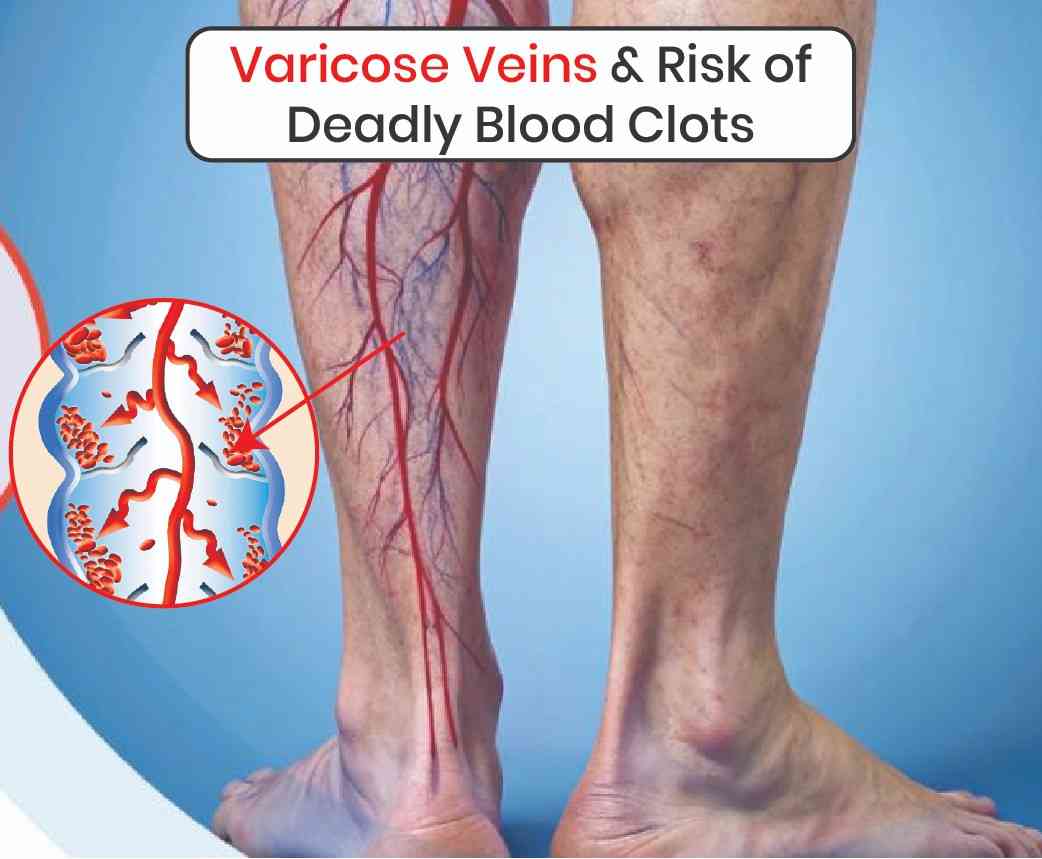
Varicose veins develop when the valves within the veins weaken or fail, causing blood to pool
and the veins to enlarge. While they may initially seem harmless, varicose veins can progress
and lead to various complications if left untreated. These complications include:
Chronic Pain and Discomfort: Varicose veins often cause
aching, throbbing, and heaviness in the legs, especially after prolonged periods of standing or
sitting. This chronic discomfort can significantly impair one’s quality of life and daily
activities.
Skin Changes and Ulcers: Over time, untreated
varicose veins can lead to skin changes such as discoloration, inflammation, and thickening. In
severe cases, the lack of proper blood flow can result in venous ulcers, open sores that are
challenging to heal and prone to infection.
Bleeding: Varicose veins close to the skin’s surface are more
susceptible to injury. Even minor trauma, such as a bump or scratch, can lead to bleeding. While
usually not life-threatening, persistent bleeding requires medical attention to prevent
complications.
Superficial Thrombophlebitis: This condition occurs when a blood
clot forms in a superficial vein, causing inflammation and pain. While usually not dangerous, it
can lead to complications if the clot extends into deeper veins.
While these complications are concerning, perhaps the most alarming risk associated with
varicose veins is their potential to indicate the presence of a blood clot, specifically deep
vein thrombosis (DVT). DVT occurs when a blood clot forms in a deep vein, typically in the legs.
If a piece of the clot breaks off and travels to the lungs, it can cause a life-threatening
condition known as pulmonary embolism (PE). The consequences of untreated DVT and PE can be
severe and include:
Pulmonary Embolism (PE): When a blood clot travels
to the lungs, it can block blood flow, leading to difficulty breathing, chest pain, rapid heart
rate, and even sudden death. PE requires immediate medical attention and can be fatal if not
treated promptly.
Chronic Venous Insufficiency (CVI): Untreated DVT can
damage the valves in the veins, leading to chronic venous insufficiency. This condition causes
swelling, skin changes, and leg ulcers, significantly impacting mobility and quality of life.
Post-thrombotic Syndrome (PTS): PTS occurs in some individuals after
experiencing DVT. It is characterized by chronic pain, swelling, and skin changes in the
affected leg, often leading to long-term disability and reduced quality of life.
Varicose veins are not merely a cosmetic concern but can indicate underlying vascular issues
that warrant attention. Beyond the discomfort and cosmetic implications, untreated varicose
veins can lead to serious complications, including the development of deadly blood clots such as
DVT and PE.
Recognizing the potential risks and seeking appropriate treatment is essential for preventing
complications and maintaining overall health and well-being. If you are experiencing symptoms of
varicose veins or are concerned about your vascular health, consult with a qualified healthcare
professional for an evaluation and personalized treatment plan.
