
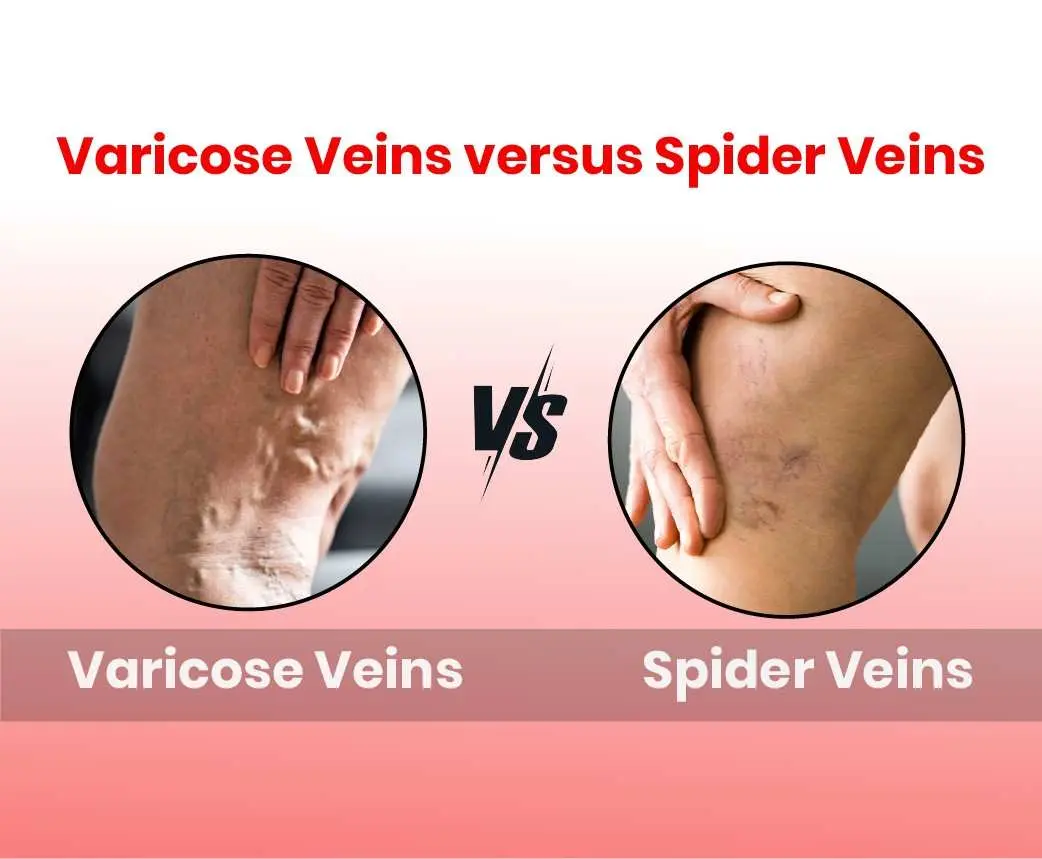
What are varicose veins? How do we get spider veins? Are varicose veins any different from
spider veins? These are the most common questions that a majority of the people have when they
are experiencing what they think might be varicose veins or spider veins.
Varicose veins and spider veins are both similar vascular disorders. However, when we pay close
attention, there are prominent differences in the symptoms and treatment of both these medical
conditions.
Let us understand the similarities and differences in varicose veins and spider veins in the
blog today.
What are varicose veins?
Varicose veins are the swollen, enlarged, and twisted veins that turn bluish-purple in colour.
These abnormal and dilated veins are commonly found on the legs and are clearly visible to the
naked eye.
Varicose veins can be easily felt right under the surface of the skin. Varicose veins cause a
feeling of heaviness and discomfort in the legs. The patient also feels itching and irritation
on the damaged area accompanied by a burning, throbbing or tingling sensation.
Varicose veins, when left untreated, can lead to severe health issues like blood clots, DVT, and
active venous ulcers. It is vital to get the varicose veins treated to prevent them from
worsening and for improving the look and feel of your legs.
What are spider veins?
Comparatively smaller in size than varicose veins, spider veins are red, purple, and blue blood
vessels that are visible on the skin of the legs, chest, and face in the form of branches or
spider web like structure.
These veins are tiny, mostly less than 1mm in diameter and visible just below the surface of the
skin. Spider veins are usually painless and do not cause swelling in the affected area. Spider
veins generally do not lead to any other critical health problems.
Spider veins may be caused due to the faulty one-way valves or may occur due to chronic venous
insufficiency. A patient may have both varicose veins and spider veins at the same time but not
all spider veins turn.
What causes varicose veins and spider veins?
Both these are vascular disorders that occur due to malfunctioning valves of the veins that
restrict the blood from flowing back to the heart and instead result in the pooling of the blood
in the veins and the surrounding tissues.
This causes additional pressure on the veins and makes them enlarged and bulging out from the
surface of the skin. The below-mentioned factors are the leading risk factors for varicose veins
and spider veins:
Hereditary
Obesity
Lack of physical exercise
Use of birth control pills
History of blood clots
Hormonal replacement after menopause
Hormonal influence during pregnancy, puberty, menopause
Occupations that require extended hours of standing or sitting in the same position (nurses,
teachers, factory workers, hair stylists, etc)
Conditions that increase the pressure in the abdomen area (tumours, constipation, certain
garments, etc)
Any previous vein surgery
Trauma or injury to the leg
Exposure to UV rays
Similarities between varicose veins and spider veins
Varicose veins and spider veins are very common. As many as 50% of people over 50 years of age
suffer from varicose veins.
Both these medical conditions are hereditary disorders. If anyone in your family has had
varicose veins or spider veins, it is not uncommon for you to also have them.
Spider veins, as well as varicose veins, are related to body weight. Obese people have a higher
tendency of suffering from one or both of these venous disorders.
Spider veins and varicose veins are related to the age as older people more are more likely to
suffer from them.
Both these are also related to the gender as a large number of women have been reported to
suffer from varicose veins and spider veins as opposed to their male counterparts.
Differences between varicose veins and spider veins
Varicose veins usually occur on the legs while spider veins can occur on the legs, face, and
chest also.
Spider veins are oftentimes just a cosmetic issue but varicose veins deteriorate the quality of
the life and hinder with the everyday activities.
Varicose vein symptoms are much worse and lead to extreme swelling, pain, itching, and
discomfort in the legs.
Spider veins hardly result in any extreme condition while varicose veins always have a high
chance of getting worse in cases when the treatment is delayed.
A few women may develop varicose veins during pregnancy which may go away on its own in about 3
months after delivery. Spider veins have no link to pregnancy.
Treatment for spider veins may only be needed for cosmetic purposes but is it essential to get
varicose veins treated to prevent further worsening of the condition. Untreated varicose veins
can lead to Deep Vein Thrombosis (DVT), chronic venous insufficiency, venous ulcers, etc.
Today, with enormous advancements in medical science and technology, painless and minimally
invasive laser treatment options are available for varicose veins. Referred to as the it is a quick procedure and has proven to deliver successful results for even
the most critical cases.
Dr. Rajah V Koppala is an internationally qualified and extensively trained interventional
radiologist with years of experience. He has successfully treated over 12000 patients,
not only from India, but also from Bangladesh, Sri Lanka, Middle East, Europe, and America.
At Avis Hospitals, Dr. Rajah V Koppala only employs the USFDA approved treatment procedure for
varicose veins. This is suitable for people of all age
groups and has a success rate of 95% with zero downtime.
Avis Hospitals offer 100% price assurance at the time of admission and also offer free colour
doppler examination for all patients. Avis Hospitals also offers round the clock services for
outstation patients along with 100% assistance for Mediclaim requests as well. We are your
one-stop medical institution for the most genuine treatment of varicose veins. Schedule an
appointment with Dr. Rajah V Koppala at Avis Hospitals today!