Ask 10 people what causes varicose veins and you'll get 10 confident, mostly wrong answers. Somewhere between the aunt who swears it's “just ageing,” the neighbour who blames “crossing your legs too much,” and the internet forum insisting surgery is the only fix, the actual facts about varicose veins get buried under decades of half-truths. That confusion has a real cost - it typically prevents people from scheduling a basic Screening until the issue has subtly worsened. So let's dispel one myth at a time.
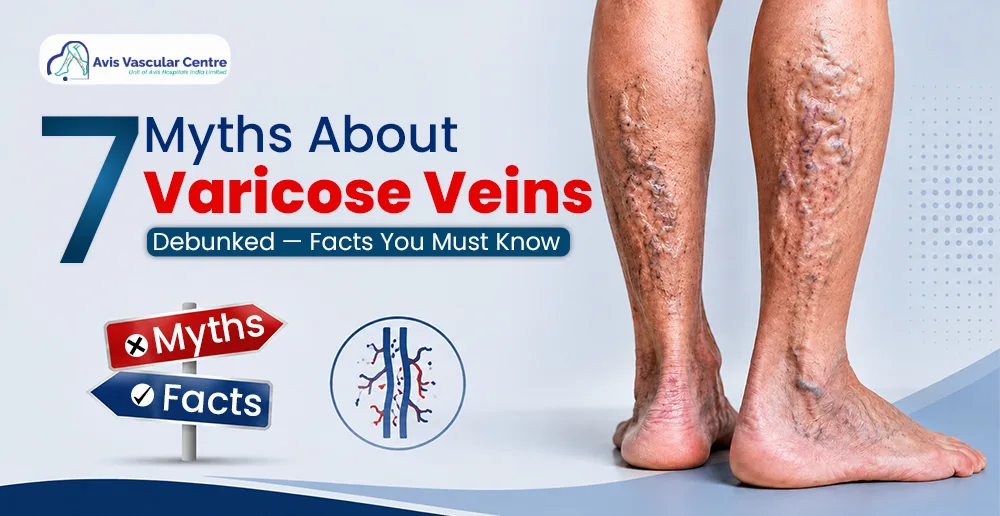
7 Myths About Varicose Veins Debunked — Facts You Must Know
Myths
1. Varicose veins are just a cosmetic problem.
Varicose veins can be a visible symptom of an underlying problem, such as malfunctioning vein valves that allow blood to flow backward (reflux). If left untreated, this can lead to skin changes, edema, and even venous ulcers. It's not the other way around; it's a circulation problem that just so happens to be apparent.
2. Only older people get varicose veins.
Although age increases the risk, people in their twenties and thirties can still develop varicose veins, particularly if they are pregnant, have a family history of the condition, are obese, or work long hours. Adults of any age, not just those over 60, may experience vein valve weakening.
3. Crossing your legs causes varicose veins.
This one is persistent, yet it lacks proof. Leg-crossing behaviors are not the true causes of varicose veins; instead, valve failure, heredity, hormonal changes, and extended standing or sitting are. It is fine to sit however you feel most comfortable.
4. If you don't see bulging veins, you don't have a problem.
A Doppler Screening often reveals venous reflux in many patients long before any vein bulges noticeably. Symptoms are just as important as appearance because early-stage insufficiency might induce heaviness, pain, or evening swelling with no visible veins at all.
5. Varicose vein treatment always means major surgery.
In the past, vein stripping surgery was the primary procedure for treating varicose veins. Today, endovenous laser or radiofrequency ablation and sclerotherapy are common, performed under local anesthesia, and patients frequently leave the same day.
6. Exercise makes varicose veins worse.
Usually, the opposite is true. The "calf muscle pump," which helps push blood back up into the heart, is activated by walking and calf-strengthening workouts, which can reduce symptoms. Prolonged idleness, not movement, is what usually exacerbates the condition.
7. Once treated, varicose veins never come back.
Your underlying propensity for valve weakness is not altered by treatment; instead, the afflicted vein is closed off or removed. Healthy venous practices and regular follow-up are important even after treatment since new varicose veins can eventually form in other veins.
What Actually Causes Varicose Veins?
Once the myths are cleared away, the real causes of varicose veins are fairly consistent across most patients:
• Venous reflux is caused by weak or broken vein valves that enable blood to flow backward.
• Genetics: a family history greatly increases your own risk.
• Pregnancy, as a result of hormonal changes and increased blood volume
• Extended sitting or standing, which is typical in some vocations
• Age-related deterioration of vein walls and valves over time.
• Obesity puts additional strain on the veins in the legs.
Varicose Veins Treatment: What's Actually Available
Varicose veins treatment today is far less invasive than most people expect, and it's matched to how advanced the reflux is:
✓ Compression stockings and lifestyle changes for early-stage or mild cases
✓ Sclerotherapy — an injection that closes off small varicose or spider veins
✓ Endovenous laser or radiofrequency ablation — minimally invasive procedures for larger veins
✓ Ambulatory phlebectomy for select surface veins, done under local anaesthesia
✓ Traditional vein stripping, now reserved only for specific, less common cases
Conclusion
More myths surround varicose veins than any other common ailment, and each myth gives the underlying issue more time to develop quietly. With a precise Color Doppler diagnostic and a treatment plan based on your unique vein health rather than internet rumors, Avis Vascular Center eliminates the uncertainty. The experts at Avis Vascular Center are prepared to provide you with genuine answers, including a cutting-edge, minimally invasive course of action if necessary, whether you're dealing with obvious veins, unexplained heaviness, or simply want a baseline check.
Frequently Asked
Questions
For any unanswered questions, reach out to our support team via email. We’ll respond as soon as possible to assist you.
For Enquiry
✉
info@avisvascularcentre.com
☎
+91 80089 49900
Are varicose veins dangerous?
−
While the majority of cases are treatable, untreated reflux can eventually lead to ulcers, skin
damage, or chronic venous insufficiency, which is why early assessment is crucial.
Can varicose veins be prevented?
+
While genetics cannot be changed, you can significantly reduce your risk and limit the disease's
progression by being active, maintaining a healthy weight, and avoiding extended periods of
immobility.
Is varicose vein treatment painful?
+
Most patients return to their regular activities within a day or two after modern treatments,
which are performed under local anesthesia with little discomfort.
How do I know if I need treatment or just monitoring?
+
A Color Doppler Screening is the most effective approach to determine the severity of the reflux and
if it is likely to worsen, which helps choose whether to treat it right away or just keep an eye
on it.
Do varicose veins always come back after treatment?
+
The treated vein itself doesn't recur, but new varicose veins can form elsewhere over the years,
so periodic check-ins are worth keeping on your calendar.