Blog > Diagnosis and Treatment >A Comprehensive Comparison of three vein treatments
A Comprehensive Comparison of three vein treatments
18-October-2025Category: Diagnosis and Treatment
Vein disorders can be troublesome, but advancements in medical technology have provided patients
with effective treatment options. Among these, Sclerotherapy, Radiofrequency Ablation (RFA), and
Cryo-Laser & Cryo-Sclerotherapy (CLaCS) stand out. In this blog, we will explore each treatment,
comparing their benefits and highlighting why CLaCS emerges as a superior option.
Get Your First Doppler Scan FREE — Worth ₹4,500!
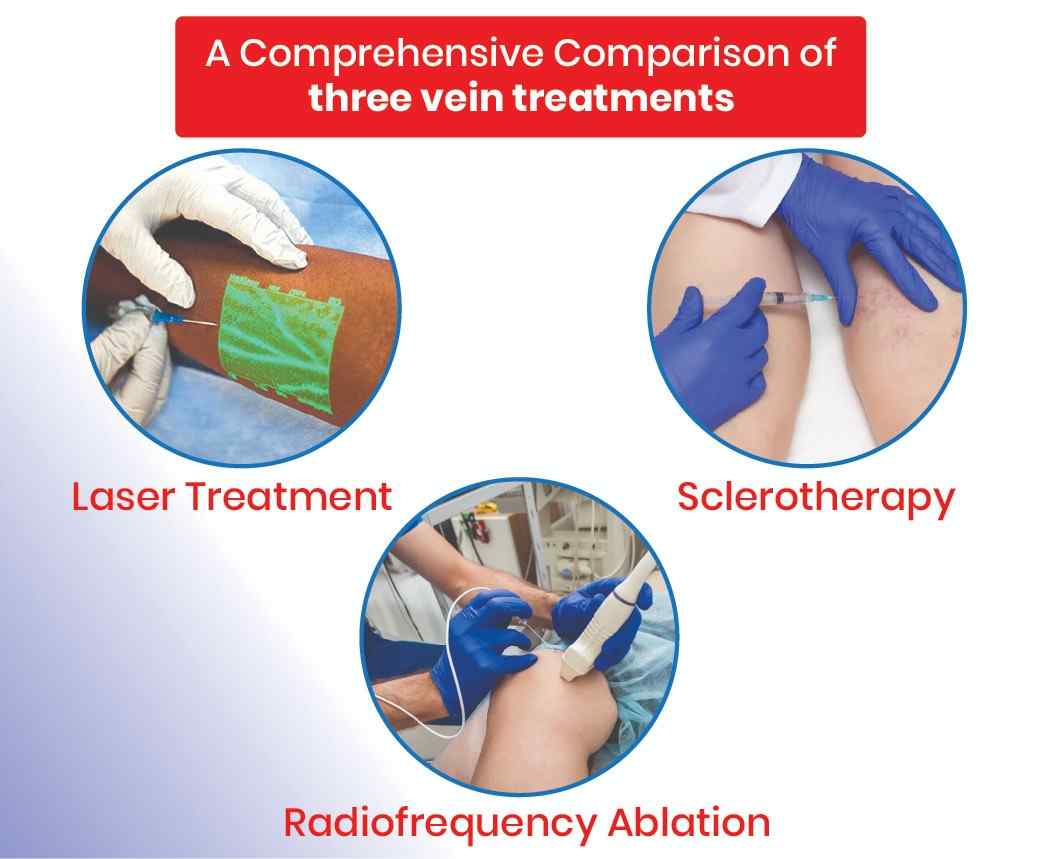
Sclerotherapy:
Sclerotherapy is a tried-and-tested method for treating small to medium-sized varicose and
spider veins. This procedure involves injecting a sclerosing solution directly into the affected
veins, causing them to collapse and fade over time. While effective for many patients,
Sclerotherapy may not be suitable for larger veins or those with underlying issues like venous
reflux.
Confused about treatment options? Our experts will guide you step by step.
Radiofrequency Ablation (RFA):
RFA has gained popularity as a minimally invasive technique for treating varicose veins. It
utilizes radiofrequency energy to heat and close off problematic veins, redirecting blood flow
to healthier ones. RFA offers good results, especially for larger veins, but it may not be ideal
for patients with certain medical conditions or those seeking less invasive options.
Cryo-Laser & Cryo-Sclerotherapy (CLaCS):
CLaCS represents the latest advancement in vein treatment, offering a comprehensive solution for
various vein disorders. This innovative procedure combines cryotherapy, laser technology, and
sclerotherapy to effectively address varicose veins.
Unlike traditional methods, CLaCS offers several distinct advantages: Minimally Invasive: CLaCS involves a small incision through which a
specialized catheter is
inserted into the affected vein. This minimally invasive approach reduces the risk of
complications and shortens recovery time compared to surgical procedures.
Dual Action: CLaCS combines the benefits of cryotherapy and laser technology
with sclerotherapy.
Cryotherapy numbs the treatment area and minimizes discomfort, while laser energy targets and
seals off the diseased vein. Additionally, sclerosing agents are delivered through the catheter,
aiding in vein closure.
Precision Treatment: CLaCS allows for precise targeting of veins, including
those located deeper
within the tissue. This precision minimizes damage to surrounding tissues and enhances patient
comfort during the procedure.
Versatility: CLaCS can effectively treat a variety of vein types and sizes,
from small spider
veins to larger varicose veins. Its versatility makes it suitable for a wide range of patients
with different vein conditions.
Reduced Risk of Complications: By combining cryotherapy, laser technology, and
sclerotherapy,
CLaCS reduces the risk of complications associated with other techniques. Cryotherapy helps
minimize inflammation and discomfort, while sclerosing agents effectively close off treated
veins.
While Sclerotherapy and RFA have been staple treatments for varicose veins, the introduction of
Cryo-Laser & Cryo-Sclerotherapy (CLaCS) represents a significant advancement in vein care. Its
innovative combination of cryotherapy, laser technology, and sclerotherapy offers patients a
safer, more precise, and versatile alternative to traditional methods.
WE, at Avis Vascular Center, always prioritize patient care and strive to offer the most
advanced treatments available. If you’re considering treatment for varicose veins, schedule a
consultation with our experienced team to learn more about the benefits of CLaCS and how it can
help improve your vascular health.
For any unanswered questions, reach out to our support team via
email. We’ll respond as soon as possible to assist you.
For Enquiry
✉
info@avisvascularcentre.com
☎
+91 80089 49900
What is the main difference between sclerotherapy, RFA, and CLaCS?
−
Sclerotherapy treats smaller veins using injections, while RFA uses heat to close larger
varicose veins. CLaCS combines laser, cryotherapy, and sclerotherapy in one procedure, allowing
it to treat a wider range of vein types with greater precision and comfort.
Is CLaCS more comfortable than sclerotherapy or RFA?
+
Yes, CLaCS uses cryotherapy to cool and numb the treatment area, significantly reducing pain and
discomfort. This makes the procedure more tolerable than multiple injections or heat-based
treatments, with smoother recovery afterward.
Can CLaCS treat both spider veins and large varicose veins?
+
CLaCS is highly versatile and effective for treating spider veins, reticular veins, and larger
varicose veins. Its precise targeting allows treatment of veins at different depths, making it
suitable for patients with complex or mixed vein conditions.
How does recovery after CLaCS compare to other treatments?
+
Recovery after CLaCS is typically quick due to its minimally invasive nature. Most patients
resume normal activities shortly after treatment, with less bruising, swelling, and inflammation
compared to RFA or repeated sclerotherapy sessions.
Why is CLaCS considered an advanced vein treatment option?
+
CLaCS combines multiple proven technologies into a single treatment, improving effectiveness
while reducing complications. Its precision, comfort, and cosmetic outcomes make it a
next-generation solution in modern varicose vein care.