It's a typical worrying moment when you look down at your legs and see noticeable, protruding
veins that weren't there before. Could they be an indication of something more serious, or are
they only a cosmetic issue? One of the most common reasons people see a vascular expert is because of bulging
veins in their legs.
Prominent veins on the legs might occasionally be completely benign. In others, they are a sign
of an underlying venous illness and an early indicator of varicose veins. Being able to
recognize the differences enables you to take action before issues arise.
Are Bulging Veins in Legs Always a Problem?
Not all the time. Healthy people may have visible veins, especially those who are sporty,
slender, or have fair skin. Veins may also become momentarily more noticeable with physical
activity, hot weather, and prolonged standing. These veins often follow a straight line, are
flat against the skin, and are painless.
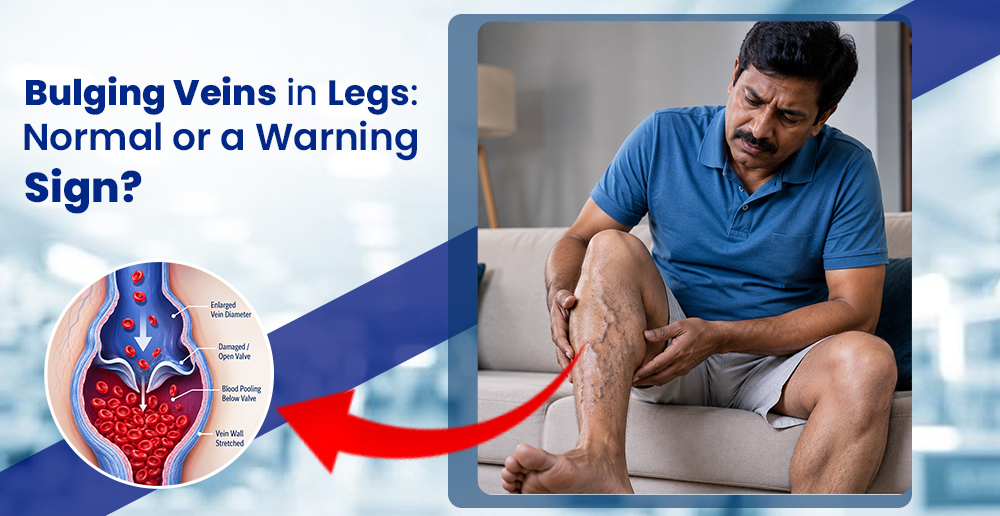
When veins start to protrude above the skin, twist into rope-like shapes, or are accompanied by
pain, heaviness, or skin changes, the image is altered. At that point, protruding veins in the
legs constitute a serious medical issue.
When Bulging Veins Become a Warning Sign
Bulging veins are a classic varicose vein symptom when
accompanied by:
• Above the skin, it has a twisted, rope-like look.
• Heaviness, throbbing, or aching, particularly after standing
• Ankle or lower leg swelling by evening
• During the night, leg itching, burning, or restlessness
• Eczema, dryness, or discolouration of the skin around the ankle
• Veins that deteriorate over several months
These signs indicate that the valves inside your leg veins are no longer working properly,
allowing blood to pool and stretch the vein walls.
Common Causes of Bulging Veins in Legs
• A family history of chronic venous illness or varicose veins
• Pregnancy, especially several pregnancies
• Extended periods of sitting or standing, which are typical in many jobs
• Being overweight puts more strain on the veins in the legs.
• After 40, vein walls naturally become less elastic.
• Hormonal shifts brought on by menopause or contraception.
Normal Visible Veins vs Varicose Veins
The table below highlights how to tell harmless visible veins apart from a true varicose vein
symptom.
| Feature |
Normal Visible Veins |
Varicose Veins |
| Appearance |
Flat, straight, lying close to the skin |
Bulging, twisted, rope-like |
| Colour |
Blue or greenish, lighter shade |
Dark blue, purple, or almost black |
| Symptoms |
None - purely visible |
Aching, heaviness, throbbing, itching |
| With Activity |
More prominent with exercise or heat, then settle |
Persistent, often worse by evening |
| Skin Changes |
None |
Discolouration, dryness, eczema, ulcers |
| Action Needed |
Cosmetic only |
Vascular evaluation recommended |
When to See a Vascular Specialist
Book an evaluation if you notice any of the following:
• Veins that twist, swell, or hurt to the touch
• Prolonged leg pain, edema, or heaviness
• Itching, hardness, or discoloration of the skin around the ankle
• An open wound or sore that won't go away
• A vein that turns unpleasant, red, or warm all of a sudden
Conclusion
To restore healthy, pain-free legs with little recovery time, a skilled vascular expert can use
duplex ultrasonography to evaluate your veins and create a customised strategy utilising
sclerotherapy, EVLT, or a combination of both. The easiest and most efficient method to safeguard
the long-term health of your veins is to take action early.
At Avis
Vascular center, our vascular specialists collaborate with other healthcare professionals to
develop an individual treatment plan for the patient to get the best diagnosis possible. This
interdisciplinary approach is found to be very beneficial for patients as it reduces the overall
treatment cost.