You’ve finally committed to a serious gym routine — heavy squats, deadlifts, long runs — and then you spot them: bluish lines or rope-like bulges along your calves. Is your workout to blame? The short answer is no. Exercise does not cause varicose veins. But certain training habits can worsen existing vein weakness or make them more visible. Here’s what the science actually says about varicose veins in gym people.
Can Gym Workouts Cause Varicose Veins?
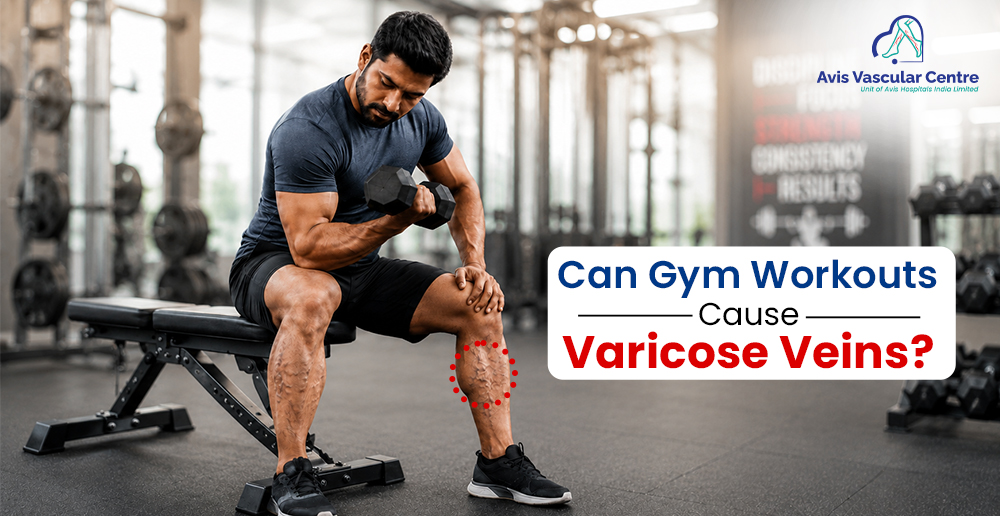
What are varicose veins?
Varicose veins are swollen, twisted superficial veins that appear most often on the legs. They develop when one-way valves inside the veins weaken, causing blood to pool instead of flowing back to the heart. The main varicose vein causes are genetics, age, hormonal changes, prolonged standing, obesity, and pregnancy — not exercise.
Why gym-goers notice vein bulging
There are four common reasons fit individuals see prominent veins, and most of them are entirely harmless.
• Low body fat: Because lean persons have less fat covering their veins, they are more noticeable. These are healthy and not varicose.
• Increased blood flow: During lifting or cardio, blood volume to working muscles increases dramatically, briefly distending veins. They flatten after an exercise.
• Valsalva manoeuvre: Holding your breath during heavy lifts increases intra-abdominal pressure, which travels to leg veins and, over time, stresses fragile valves.
• Pre-existing insufficiency: Intense exercise might reveal a familial history of varicose veins rather than cause them.
Healthy veins vs varicose veins
| Feature | Normal Visible Veins | Varicose Veins |
|---|---|---|
| Appearance | Flat, straight | Bulging, twisted |
| Symptoms | None | Aching, heaviness, itching |
| After rest | Unchanged | Less prominent |
| Skin changes | None | Darkening, eczema |
Gym habits that may worsen vein problems
• Heavy lifting without proper breathing technique
• Tight belts or restrictive waist trainers
• Prolonged standing between sets
• Bypassing cool-downs
• Ignoring leg discomfort or nocturnal cramps
Exercises that actually help your veins
Movement is your veins’ best friend. Walking, cycling, swimming, and yoga are all calf-pump exercises that cause blood to flow upward through the deep venous system. If you lift, exhale as you strain yourself, avoid holding your breath, and finish with leg-elevation stretches.
When to see a vein specialist
Consult a vascular specialist if you have persistent leg heaviness, swelling, bulging veins that don’t flatten with rest, skin darkening near the ankles, or restless legs at night. A venous Doppler ultrasound is painless and can detect valve dysfunction early — long before complications like ulcers or clots develop.
Worried about visible or aching veins?
While working out at the gym doesn't cause varicose veins, it might highlight vein insufficiency that already exists. It's typically just good circulation at work if you're athletic and slender and see bulging veins after a workout. But rather than assuming it's "just from the gym," it's worth getting a complete Doppler evaluation if the bulging is persistent, painful, or accompanied by heaviness or swelling. Maintaining an active lifestyle is beneficial for your veins; the secret is to exercise wisely rather than to quit.
Conclusion
Concerned about apparent or painful veins? At Avis Vascular Centre, Doppler ultrasound is not treated as a formality, but as the starting point of personalised care. As Dr. Rajah V Koppala explains, better diagnosis always leads to better healing. Get a clear, painless diagnosis from India's top vein doctors by scheduling your FREE Doppler scan at Avis Vascular Center now.
Frequently Asked
Questions
For any unanswered questions, reach out to our support team via email. We’ll respond as soon as possible to assist you.
For Enquiry
✉
info@avisvascularcentre.com
☎
+91 80089 49900
Can lifting heavy weights cause varicose veins?
−
No, but improper breathing technique during heavy lifts can worsen pre-existing valve weakness.
Should I stop going to the gym if I have varicose veins?
+
No. Continue low-impact cardio and controlled strength training with good technique.
Do compression stockings help during workouts?
+
Yes. They promote venous return and alleviate tiredness, especially during lengthy runs or standing workouts.
Are bulging veins after a workout dangerous?
+
Usually not — they flatten within minutes. Persistent bulging requires a Doppler evaluation.