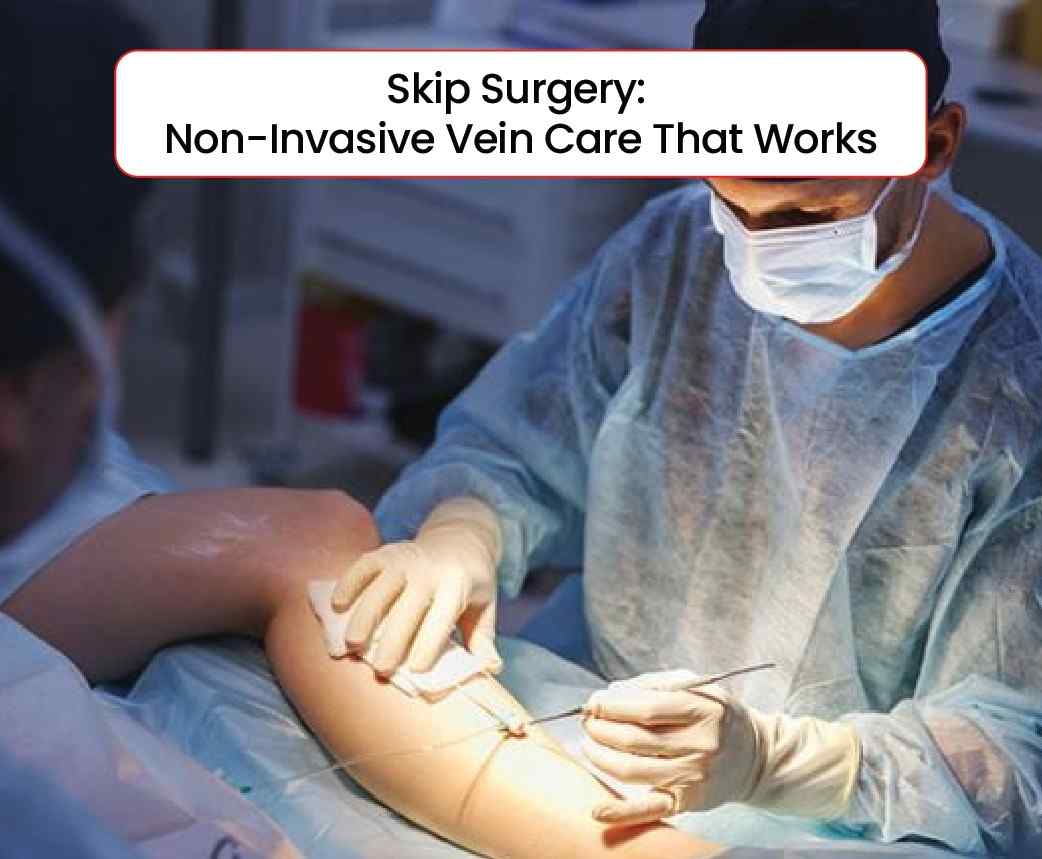
Blog > Diagnosis and Treatment > Skip Surgery: Non-Invasive Vein Care That Works
Skip Surgery: Non-Invasive Vein Care That Works
18-October-2025Category: Diagnosis and Treatment
Vein health is essential for overall well-being, yet it’s often overlooked. Veins play a vital
role in circulating blood back to the heart, and when they aren’t functioning properly, it can
lead to a range of conditions, from mild discomfort to serious health risks. This article
explores common vein issues like varicose veins, deep vein thrombosis (DVT), post-thrombotic
syndrome (PTS), venous ulcers, and the unique challenges diabetes poses for vein health. We’ll
also discuss advanced, non-surgical treatment options that provide relief without the need for
invasive vein stripping.
Varicose Veins: Not Just a Cosmetic Concern
Varicose veins are swollen, twisted veins that often appear on the legs. They can be unsightly
and cause pain, itching, or even a burning sensation. Although some people consider them only a
cosmetic issue, varicose veins may indicate a deeper circulatory problem known as chronic venous
insufficiency (CVI). When left untreated, CVI can lead to swelling, skin changes, and more
serious complications.
Deep Vein Thrombosis (DVT): A Silent Yet Serious Threat
DVT is a condition where a blood clot forms in a deep vein, usually in the legs. This can be
life-threatening if the clot dislodges and travels to the lungs, causing a pulmonary embolism.
DVT often has no visible symptoms, making it a “silent” threat. Risk factors include prolonged
immobility, certain medications, and even genetic predispositions. Individuals who have had DVT
are at risk for PTS, a chronic condition that can cause pain, swelling, and skin discoloration,
further complicating vein health.
Post-Thrombotic Syndrome (PTS): The Lingering Effects of DVT
PTS develops in about half of DVT patients and can significantly impact quality of life.
Symptoms
include persistent pain, swelling, and a feeling of heaviness in the affected limb. PTS can lead
to
skin ulcers, increasing the risk of infection and further complications. Proper management of
DVT is
crucial to reducing the chances of developing PTS.
Venous Ulcers: Painful and Hard to Heal
Venous ulcers are open sores that commonly occur on the lower legs due to improper blood flow in
the veins. These ulcers can be painful, slow to heal, and prone to infection. People with
varicose veins, DVT, or other vein conditions are at higher risk for venous ulcers, making
proactive vein care essential.
Diabetes and Vein Health
Diabetes affects blood vessels throughout the body, including the veins. High blood sugar levels
can lead to poor circulation, increasing the risk of blood clots and making diabetic patients
more vulnerable to vein issues like DVT and venous ulcers. This highlights the importance of
vein health management as a part of diabetes care, particularly as diabetic individuals face
greater challenges in healing if vein problems arise.
Get Your First Doppler Scan FREE — Worth ₹4,500!
Interventional Treatments: A Better Option for Many
For those worried about invasive vein surgery, today’s minimally invasive treatments offer
effective, safer alternatives. Rather than traditional vein stripping, which requires
significant downtime, modern interventional techniques are typically performed in an outpatient
setting with minimal recovery time.
Endovenous Laser Therapy (EVLT): This procedure uses laser energy to close off
varicose veins.
It’s highly effective and typically causes less pain and bruising than surgery. Sclerotherapy: A medical solution is injected into the vein, causing it to
collapse and
gradually be absorbed by the body. This method is effective for smaller varicose veins and
spider veins and can be done quickly, with minimal discomfort. Radiofrequency Ablation (RFA): RFA uses radiofrequency energy to heat and close
off the
problematic vein. It is a minimally invasive procedure with a short recovery period, often
allowing patients to resume normal activities the same day. Venaseal: This relatively new treatment uses medical adhesive to close the
vein, and it doesn’t
require tumescent anesthesia or post-procedure compression stockings, making it very comfortable
for the patient. Microphlebectomy: For large varicose veins near the surface of the skin, this
technique removes
the vein through tiny incisions, providing immediate improvement with little scarring.
The Importance of Vein Health: A Lifetime of Benefits
Taking care of your veins is more than just a cosmetic choice—it’s a health necessity. Healthy
veins reduce the risk of serious complications like DVT, PTS, and venous ulcers. With proper
vein care, individuals can maintain better circulation, avoid pain and swelling, and enjoy a
better quality of life. For those with diabetes, proactive vein management is especially
critical.
If you’re experiencing any symptoms of vein disease, don’t wait to seek treatment. Today’s
interventional options offer safe, effective, and minimally invasive solutions that can help you
maintain healthy veins without the need for invasive surgery. Taking action now can save you
from potential complications down the line and ensure that your veins are in top form for years
to come, promoting better circulation, reduced pain, and a healthier lifestyle.
Confused about treatment options? Our experts will guide you step by step.
Is Ablation Right for You?
Thyroid ablation is particularly suitable for patients who:
• Have benign thyroid nodules. • Want to avoid surgery • Are concerned about scarring • Need a quick return to daily activities • Wish to preserve natural thyroid function
Take the Next Step
Don’t let thyroid nodules affect your quality of life. With thyroid ablation, you can address
your condition without the drawbacks of traditional surgery. Our expert team at Avis Vascular
Centre is ready to help you understand if this innovative treatment is right for you.
Book a consultation today to learn more about how thyroid ablation can help you achieve better
thyroid health with minimal disruption to your life.
Note: Individual results may vary. Consultation with our specialists is required to determine
suitability for the procedure.
For any unanswered questions, reach out to our support team via
email. We’ll respond as soon as possible to assist you.
For Enquiry
✉
info@avisvascularcentre.com
☎
+ 91 80089 49900
Why do success rates differ between EVLA, RFA, and VenaSeal™ if all close the vein?
−
Although all three treatments aim to close the diseased vein, they use different mechanisms. EVLA
and RFA rely on controlled heat to seal the vein walls, while VenaSeal™ uses a medical adhesive to
bond them shut. Differences in technology, vein anatomy, and patient factors account for slight
variations in success rates, though all are considered highly effective by modern vascular
standards.
Is the higher cost of VenaSeal™ justified compared to EVLA or RFA?
+
VenaSeal™ costs more primarily due to imported adhesive systems and advanced catheter technology.
The higher price often reflects added convenience rather than better outcomes. Patients benefit from
faster recovery, fewer injections, and usually no compression stockings, which can offset indirect
costs such as time off work or post-procedure discomfort.
Why does sclerotherapy require multiple sessions while other treatments do not?
+
Sclerotherapy treats smaller surface veins and spider veins, which are often widespread and
numerous. Each session addresses only a limited number of veins to maintain safety and
effectiveness. In contrast, EVLA, RFA, and VenaSeal™ target larger underlying veins responsible for
reflux, usually allowing complete treatment in a single session.
How do hidden costs impact the overall expense of varicose vein treatment?
+
The procedure cost is only one part of total expenditure. Diagnostic tests, compression stockings,
follow-up visits, medications, and time away from work can significantly influence final costs.
Treatments with faster recovery and fewer repeat sessions may ultimately be more economical despite
a higher upfront price.
Why do insurance companies cover EVLA and RFA more readily than VenaSeal™?
+
EVLA and RFA have been used for a longer time and are widely classified as standard medical
treatments for venous insufficiency. Some insurers still consider VenaSeal™ a newer or premium
option, leading to variable coverage. Insurance approval often depends on medical necessity, policy
terms, and documented vein reflux.