Blog > Vascular Diseases > Varicose Veins vs Normal Leg Pain: How to Tell the Difference
Most people have experienced leg discomfort at some point in their lives. It could occur
following a demanding workout, a long day at work, or several hours of standing and walking.
With rest, the discomfort usually goes away. Leg pain, however, may indicate a more serious
vascular issue
like varicose veins if it is frequent, persistent, or accompanied by obvious vein
changes.
It's critical to distinguish between vein-related discomfort and common leg pain since prompt
diagnosis can help avoid long-term consequences and enhance quality of life.
What Is Considered Normal Leg Pain?
Normal leg discomfort is typically transient and associated with exercise or strained muscles.
It frequently happens during physical activity, stair climbing, extended standing, dehydration,
or minor injury. One of the most frequent causes of sporadic leg pain is muscle exhaustion and
cramping.
In most cases, this kind of soreness goes away quickly. Relief is frequently obtained by
stretching, resting the legs, drinking plenty of water, or using ice. There are typically no
obvious changes to the skin or veins, and the pain is restricted to the muscles.
Typical characteristics of typical leg discomfort include:
• Soreness that is mild to moderate
• Momentary tightness in the muscles
• Pain following physical activity
• Hydration and relaxation provide relief.
• No apparent veins or oedema
Normal leg discomfort is painful, but it rarely causes long-term disruptions to regular
activities.
What Are Varicose Veins?
When the veins' internal valves malfunction, varicose veins result. Normally, these valves aid
in the upward movement of blood toward the heart. The veins swell and twist beneath the skin as
a result of blood pooling inside them as they weaken.
Because walking and standing put more pressure on the veins in the lower body, the ailment is
most prevalent in the legs. Age, obesity, pregnancy, standing for extended periods of time, a
sedentary lifestyle, and a family history can all raise the risk.
Varicose vein soreness is frequently persistent and growing, in contrast to typical muscle pain.
How Does Varicose Vein Pain Feel?
Varicose vein sufferers frequently characterise the feeling as:
- Legs that are heavy
- Pain that throbs or aches
- A burning feeling
- Weariness or agitation in the legs
- Ankle swelling
As the day goes on, the discomfort typically gets greater, especially after extended periods of
sitting or standing. Leg elevation frequently provides momentary relief.
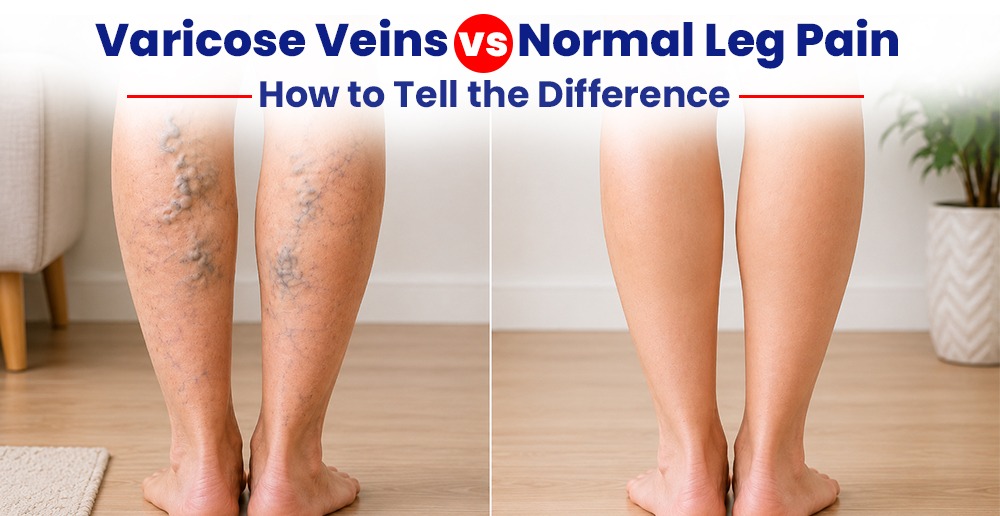
The emergence of larger blue or purple veins that seem twisted or bulging beneath the skin is
one of the most significant warning indicators.
Important Distinctions Between Normal Leg Pain and Varicose Veins
1. Changes in Visible Veins
Visible vein anomalies are not caused by typical leg pain. Beneath the skin, varicose veins are
frequently readily apparent.
2. Symptom Duration
Pain in the muscles goes away in a few of days. The symptoms of varicose veins might last for weeks,
months, or even years without treatment.
3. Swelling and Skin Changes
Varicose veins can cause ankle swelling, skin darkening, itching, and thickened skin around the
affected area.
4. Pain Pattern
Normal pain is usually activity-related. Varicose vein discomfort tends to worsen after prolonged
standing and improve with leg elevation.
5. Recurrence
Ordinary muscle pain occurs occasionally. Varicose vein symptoms often return repeatedly and
gradually worsen over time.
When Is It Time to See a Vascular Specialist?
You ought to consult a doctor if you observe:
• Chronic pain or heaviness in the legs
• Enlarged veins
• Swelling that doesn't get better
• Discolouration of the skin
• Discolouration of the skin
• Itching or burning along veins
• Restless legs or cramping at night
• Pain interfering with everyday tasks
Contemporary vascular therapies are very successful and less invasive. A Doppler ultrasonography can
precisely identify vein issues and assist medical professionals in choosing the most effective
course of
treatment.
Complications like venous ulcers, blood clots, or chronic venous insufficiency might result from
ignoring symptoms. Early intervention not only reduces discomfort but also stops the disease from
getting worse.