Blog > Vascular Diseases > Why CLaCS Beats Sclerotherapy for Spider Veins
Why CLaCS Beats Sclerotherapy for Spider Veins
18-October-2025Category: Vascular Diseases
Spider veins, characterized by small, web-like clusters of veins near the surface of the skin,
can be a source of cosmetic concern for many individuals. While sclerotherapy has long been a
standard treatment for spider veins, the emergence of Cryo-Laser and Cryo-Sclerotherapy (CLaCS)
offers several advantages over traditional sclerotherapy. In this comprehensive blog, we explore
the reasons why CLaCS may be a better option for treating spider veins compared to
sclerotherapy.
Sclerotherapy has been a mainstay in the treatment of spider veins for decades, involving the
injection of a sclerosing solution into the affected veins to irritate the vein walls and cause
them to collapse. While sclerotherapy is generally effective, it has its limitations and
drawbacks.
Get Your First Doppler Scan FREE — Worth ₹4,500!
One of the primary limitations of sclerotherapy is its reliance on visual guidance for vein
identification and injection placement. This can sometimes result in inaccuracies, leading to
incomplete treatment or damage to surrounding tissues. Additionally, sclerotherapy may be less
effective for larger spider veins or veins located deeper beneath the skin surface.
Furthermore, sclerotherapy can be associated with discomfort and potential side effects such as
bruising, swelling, and skin discoloration. Some patients may also experience allergic reactions
or complications such as vein inflammation or blood clots.
Complications
In contrast, CLaCS treatment offers several advantages that address these limitations and
provide a more effective and comfortable alternative for spider vein treatment.
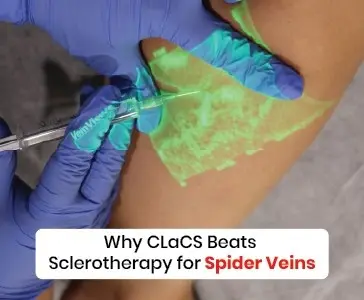
Enhanced Visualization: CLaCS utilizes augmented reality technology to provide real-time
visualization of the veins and surrounding anatomical structures. This allows for precise
identification and targeting of spider veins, minimizing the risk of inaccuracies and ensuring
optimal treatment outcomes.
Precision Targeting: With CLaCS, the combination of laser technology and cryo-sclerotherapy
allows for precise targeting of spider veins. Laser energy is used to seal the veins, while
cryo-sclerotherapy enhances treatment efficacy and minimizes discomfort.
Confused about treatment options? Our experts will guide you step by step.
Prevention and Management
Minimally Invasive Approach: CLaCS is a minimally invasive procedure that requires only small
incisions or injections, resulting in less discomfort and quicker recovery compared to
traditional sclerotherapy.
Reduced Risk of Side Effects: CLaCS treatment stands out for its ability to minimize side
effects and complications associated with vein treatments. By incorporating laser technology and
cryo-sclerotherapy, CLaCS ensures precise targeting of spider veins while reducing the risk of
bruising, swelling, and skin discoloration commonly seen with traditional sclerotherapy. The
laser energy selectively heats the targeted veins, sealing them shut without damaging
surrounding tissues, while the cooling effect of cryo-sclerotherapy numbs the treatment area,
enhancing patient comfort.
Comprehensive Treatment: CLaCS offers a comprehensive approach to spider vein treatment,
addressing both the visible veins and underlying vascular issues. This results in more effective
and long-lasting results compared to sclerotherapy alone.
Get Your First Doppler Scan FREE — Worth ₹4,500!
While sclerotherapy remains a valuable treatment option for spider veins, CLaCS offers several
advantages that make it a better option for many patients. By providing enhanced visualization,
precision targeting, and a minimally invasive approach, CLaCS treatment offers a more effective,
comfortable, and comprehensive solution for spider vein treatment.
If you are considering treatment for spider veins, be sure to discuss CLaCS with our expert
doctors at Avis Vascular Center to determine if it’s the right option for you.
Tags: CLaCS Treatment, CLaCS Treatment for Spider veins, CLaCS Vs Sclerotherapy, sclerotherapy
treatment, varicose diseases, varicose treatment, varicose veins, varicose veins treatment,
vascular leg ulcers, vein treatments, venous diseases, venous insufficiency, What is CLaCS
Treatment
For any unanswered questions, reach out to our support team via
email. We’ll respond as soon as possible to assist you.
For Enquiry
✉
info@avisvascularcentre.com
☎
+91 80089 49900
What are spider veins?
−
Spider veins are small, thin blood vessels that appear close to the skin’s surface, usually red,
blue, or purple in color. They commonly develop on the legs and face and may resemble spider webs or
tree branches.
How is CLaCS different from traditional sclerotherapy?
+
Traditional sclerotherapy relies only on injections, while CLaCS (Cryo-Laser and Cryo-Sclerotherapy)
combines laser energy, sclerotherapy, and skin cooling. This allows for better precision, improved
comfort, and more effective treatment of spider veins, especially those that are difficult to see or
treat.
Is CLaCS more effective than sclerotherapy?
+
Yes, in many cases. CLaCS provides enhanced visualization of veins, allowing doctors to treat both
visible and hidden spider veins more accurately. This often leads to better cosmetic results and
lower chances of recurrence compared to sclerotherapy alone.
Is CLaCS painful?
+
CLaCS is generally less painful than traditional sclerotherapy. The cryo-cooling system numbs the
skin during treatment, significantly reducing injection discomfort, burning sensations, and
post-procedure pain.
Are there any side effects of CLaCS?
+
Side effects are usually mild and temporary. They may include slight redness, minimal bruising, or
mild swelling, which typically resolves within a few days. Serious complications are rare when
performed by experienced specialists.