If you’re bothered by spider veins or small varicose veins, you’re not alone. These unsightly
vein issues affect millions of people worldwide, causing discomfort and self-consciousness.
Fortunately, advancements in medical technology have led to innovative treatments like CLaCS
(Cryo-Laser and Cryo-Sclerotherapy), offering effective solutions for addressing these cosmetic
concerns. Let’s delve into how CLaCS works and why it’s considered a world-class treatment for
vein issues.
Get Your First Doppler Scan FREE — Worth ₹4,500!
Understanding Spider Veins and Small Varicose Veins
Spider veins and small varicose veins are common venous conditions characterized by the
appearance of small, dilated blood vessels near the surface of the skin. Spider veins typically
manifest as thin, red, or blue lines resembling a spider’s web, while small varicose veins
appear as slightly larger, twisted veins with a bluish or purplish hue. These vein issues often
result from weakened or damaged vein valves, allowing blood to pool and veins to become
enlarged.
While spider veins and small varicose veins are primarily cosmetic concerns, they can also cause
symptoms such as itching, burning, or discomfort, especially when standing or sitting for
prolonged periods. Additionally, they may indicate underlying venous insufficiency, highlighting
the importance of proper evaluation and treatment.
Confused about treatment options? Our experts will guide you step by step.
Introducing CLaCS Treatment
CLaCS, or Cryo-Laser and Cryo-Sclerotherapy, is a cutting-edge treatment approach that combines
the benefits of cryotherapy (cold therapy) with laser technology and sclerotherapy. Developed to
target superficial vein issues like spider veins and small varicose veins, CLaCS offers patients
a minimally invasive and highly effective solution for achieving smoother, clearer skin.
How CLaCS Works
Assessment and Planning: Before undergoing CLaCS treatment, patients undergo a
comprehensive
evaluation to assess their vein issues and determine candidacy for the procedure. The treatment
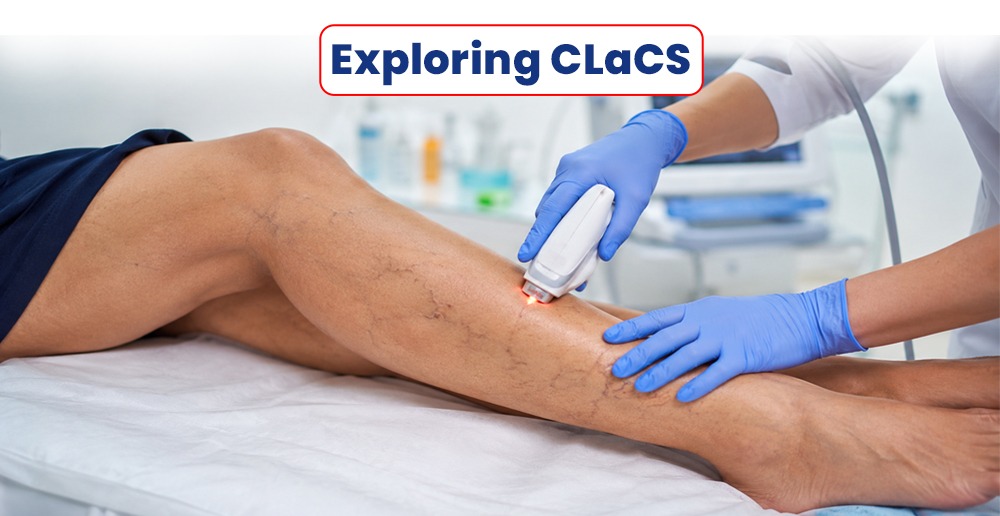
plan is tailored to each individual’s specific needs and goals. Cryo-Laser Therapy: The procedure begins with cryo-laser therapy, where a
specialized laser
device emits controlled bursts of light energy to selectively target and heat the affected
veins. This process effectively closes off the veins, causing them to shrink and eventually fade
from view. Cryo-Sclerotherapy: Following cryo-laser therapy, cryo-sclerotherapy is
performed to further
enhance vein closure and improve treatment outcomes. A sclerosing solution, typically in a foam
or liquid form, is injected into the treated veins, causing irritation and eventual closure. The
combination of cryo-laser and cryo-sclerotherapy maximizes the efficacy of the treatment while
minimizing discomfort and downtime. Post-Treatment Care: After CLaCS treatment, patients are advised to wear
compression stockings
and follow specific post-procedure instructions to promote optimal healing and results. Most
individuals can resume their normal activities shortly after treatment, with minimal
restrictions.
Benefits of CLaCS Treatment
High Success Rate: CLaCS has demonstrated high success rates in treating spider veins and small
varicose veins, with many patients experiencing significant improvement after just one
session.
Minimally Invasive: Compared to traditional surgical procedures, CLaCS is
minimally invasive,
involving no incisions or sutures. This results in less discomfort, minimal scarring, and faster
recovery times. Customized Treatment: CLaCS treatment can be tailored to address the unique
needs and
preferences of each patient, ensuring personalized care and optimal outcomes. Improved Aesthetics and Confidence: By effectively reducing the appearance of
spider veins and
small varicose veins, CLaCS treatment can enhance skin aesthetics and boost
self-confidence.
With its innovative approach and proven results, CLaCS has earned recognition as a world-class
treatment for spider veins and small varicose veins. Patients seeking a safe, effective, and
minimally invasive solution for their vein issues can benefit greatly from this advanced
treatment modality.
With its high success rates, minimal invasiveness, and personalized approach, CLaCS stands as a
world-class treatment option for individuals looking to enhance the aesthetics of their skin and
regain confidence in their appearance.
For any unanswered questions, reach out to our support team via
email. We’ll respond as soon as possible to assist you.
For Enquiry
✉
info@avisvascularcentre.com
☎
+91 80089 49900
What makes CLaCS different from regular laser or sclerotherapy treatments?
−
CLaCS combines laser therapy and sclerotherapy with cryotherapy, allowing veins to be treated
from both outside and inside while keeping the skin cool. This combination improves vein
closure, enhances comfort, and delivers better cosmetic results compared to standalone laser or
injection-based treatments.
Is CLaCS suitable only for cosmetic vein problems?
+
CLaCS is primarily designed for spider veins and small varicose veins, which are often cosmetic,
but it can also help relieve mild symptoms such as itching, burning, and leg discomfort. It may
also play a role in managing early venous insufficiency when detected during evaluation.
How many CLaCS sessions are usually required?
+
Many patients see visible improvement after a single session, but the exact number depends on
the extent, depth, and distribution of the veins. Some individuals may benefit from additional
sessions for optimal clearance and long-lasting results.
What is the recovery like after CLaCS treatment?
+
Recovery is usually quick and straightforward. Mild redness, warmth, or swelling may occur but
typically settles within a few days. Most patients can return to daily activities almost
immediately, with minimal restrictions and short-term use of compression stockings if advised.
Are the results of CLaCS permanent?
+
The treated veins are permanently closed and gradually absorbed by the body. However, since vein
disease can be progressive, new veins may appear over time due to genetics, lifestyle, or
hormonal factors. Periodic follow-up and vein care help maintain long-term results.