Blog > Vascular Diseases > What Happens If Varicose Veins Are Left Untreated?
Those protruding, rope-like veins on your legs might seem like a straightforward aesthetic
issue, but they frequently reveal more about your vascular health. Many people put off getting
treatment for years because they believe varicose veins are benign; the longer they are
neglected, the higher the risk of problems.
It's critical to comprehend the hazards associated with untreated varicose veins because
even
minor discomfort can develop into major health issues that impact circulation, skin health, and
general quality of life.
Why Untreated Varicose Veins Are More Than Cosmetic
When the one-way valves in your leg veins deteriorate, blood might pool rather than return to
the heart, leading to the development of varicose veins. The surrounding tissue is eventually
harmed by trapped pressure. Vein disease tends to worsen if left
untreated, leading to:
• Increasing leg pain, heaviness, and swelling
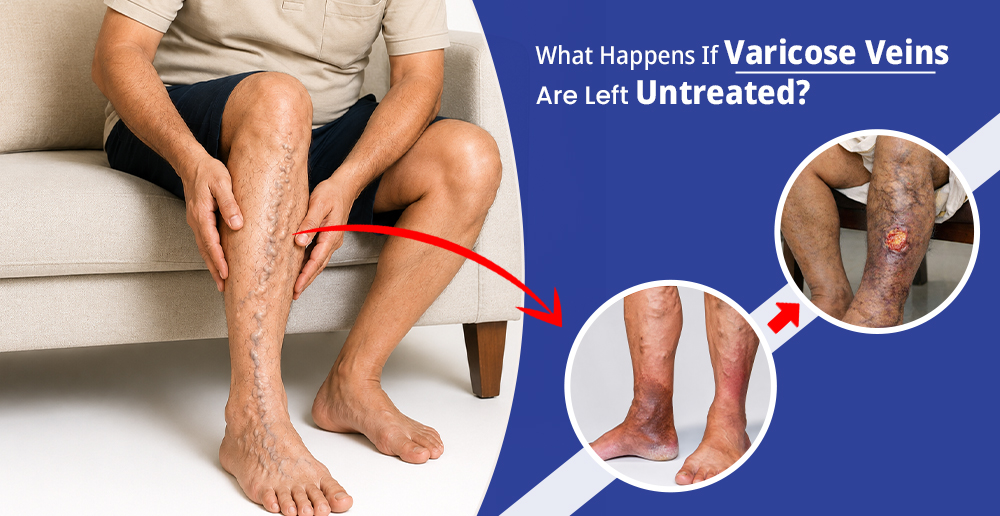
• Ankle-related inflammation and skin discoloration
• Open sores referred to as venous leg ulcers
• Spontaneous bleeding from fragile, swollen veins
• The development of blood clots in deep or superficial veins
The Most Dangerous Complications of Varicose Veins
Ignoring vein disease can result in extremely hazardous complications from varicose veins:
Chronic Venous Insufficiency (CVI) is an advanced venous disease that results in persistent
swelling and tissue deterioration because damaged valves are unable to return blood effectively.
Venous Leg Ulcers: Ankle-related lesions that heal slowly and often get septic.
Superficial thrombophlebitis is a painful clot in a surface vein that is characterized by
redness and a sensitive vein that resembles a cord.
A clot in a deep vein in the leg that has the potential to come loose and go to the lungs is
known as deep vein thrombosis
(DVT).
When a DVT enters the lungs, it can cause a pulmonary embolism, a potentially fatal situation.
Who Is Most at Risk?
Anyone can develop varicose veins, but certain factors significantly increase the untreated
varicose veins risks:
• A family history of chronic venous illness or varicose veins
• Pregnancy, particularly following multiple pregnancies
• Spending a lot of time sitting or standing at work
• Being overweight puts additional strain on the veins in the legs.
• After 40, vein walls naturally become less elastic.
• Hormonal shifts brought on by menopause or contraception
If two or more of these apply to you, regular monitoring by a vascular specialist is strongly
recommended.
When to See a Vein Specialist
Seek prompt evaluation if you notice any of the following warning signs:
• Persistent pain or swelling that makes day-to-day activities difficult
• Itching, hardness, or discoloration of the skin above the ankle
• An open wound that won't go away
• A vein that turns unpleasant, red, or warm all of a sudden
• Breathlessness or sudden, one-sided leg pain (call emergency care)
Early evaluation by a vascular specialist can stop the
disease before complications develop.
Conclusion
Varicose veins are more than simply a nuisance. They can develop from a minor inconvenience to a
major health issue affecting your skin, circulation, and mobility if left untreated.
Early detection and treatment of vein disorders are considered best. Book your appointment for a
Vein screening at Avis vascular centre today. We, at Avis, offer
minimally invasive treatments that
have high success rate of 90% in treating vein problems and reducing the symptoms.