Blog > Vascular Diseases > When Spider Veins Might Spell Trouble
When Spider Veins Might Spell Trouble
18-October-2025Category: Vascular Diseases
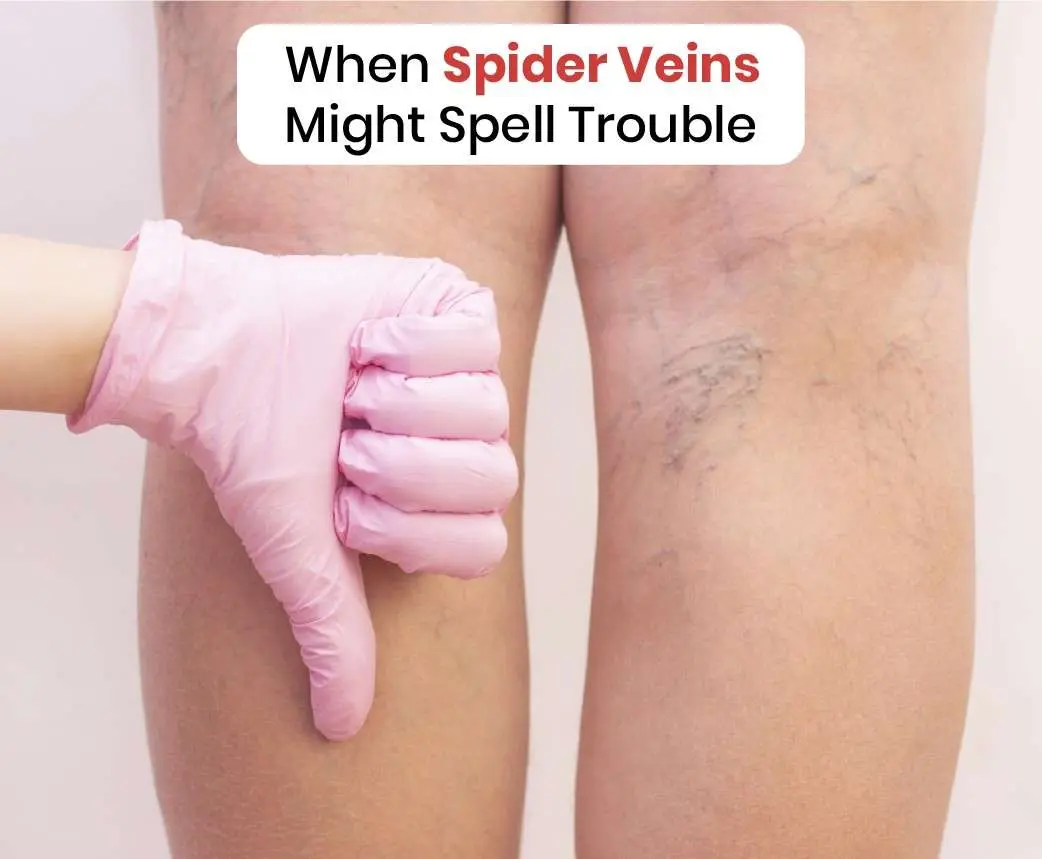
Spider veins, medically known as telangiectasias, are small, twisted blood vessels that appear
close to the surface of the skin. They often manifest as red, blue, or purple lines or webs,
resembling spider legs or tree branches. While spider veins are typically considered a cosmetic
concern, they can sometimes indicate underlying vascular issues that require attention.
Exploring treatment options can help individuals effectively address these issues and achieve
smoother, clearer skin.
Understanding Spider Veins
Spider veins, despite their harmless nature in most cases, can sometimes signal more serious
conditions or lead to complications. These concerns may include:
Discomfort and Pain: Spider veins may cause discomfort, aching, or throbbing sensations,
particularly after long periods of standing or sitting. In some cases, they can contribute to
the development of restless legs syndrome or leg cramps.
Skin Changes: Spider veins can cause skin discoloration, particularly around the affected area.
Over time, the skin may become discolored or take on a reddish or brownish hue, affecting the
appearance of the legs.
Increased Risk of Blood Clots: While rare, spider veins may be associated with deeper venous
issues such as chronic venous insufficiency (CVI) or deep vein thrombosis (DVT). These
conditions can increase the risk of blood clots, which, if left untreated, can lead to serious
complications like pulmonary embolism.
Cosmetic Concerns: Beyond the physical discomfort, many individuals with spider veins experience
self-consciousness or dissatisfaction with their appearance. Spider veins can affect confidence
and quality of life, prompting individuals to seek treatment for both medical and cosmetic
reasons.
Get Your First Doppler Scan FREE — Worth ₹4,500!
CLaCS: A Solution for Spider Veins
Cryo Laser and Cryo Sclerotherapy (CLaCS) is an advanced treatment option for spider veins that
combines the use of laser energy and cryotherapy with traditional sclerotherapy techniques.
During CLaCS:
Many individuals experience an uncomfortable itching or tingling sensation in their legs, which
can become particularly bothersome during evening hours. Leg cramps, especially during night
time, are another common complaint that can significantly disturb sleep patterns. The skin may
begin to show changes, starting with a subtle darkening or reddish discoloration. Some patients
report a feeling of restlessness in their legs, compelling them to move frequently for relief.
These symptoms typically worsen in warm weather or after prolonged periods of inactivity.
Laser energy is delivered directly to the affected blood vessels, causing them to coagulate and
collapse.
Cryotherapy is simultaneously applied to cool the skin and minimize discomfort during the
procedure.
The combination of laser energy and cryotherapy enhances the effectiveness of sclerotherapy,
leading to improved outcomes for patients.
Confused about treatment options? Our experts will guide you step by step.
Who Can Benefit from CLaCS?
CLaCS is suitable for most individuals with spider veins, including those who:
Experience discomfort or pain associated with spider veins.
Are bothered by the appearance of spider veins and wish to improve the cosmetic appearance of
their legs.
Have failed to see improvement with conservative measures like compression stockings or
lifestyle changes.
Seek a safe and effective treatment with minimal downtime and discomfort.
Before undergoing CLaCS, individuals should consult with a qualified healthcare provider to
determine if they are suitable candidates for the procedure and to discuss any potential risks
or side effects.
Get Your First Doppler Scan FREE — Worth ₹4,500!
Spider veins, while often dismissed as a cosmetic concern, can sometimes signal underlying
vascular issues or lead to discomfort and cosmetic concerns if left untreated. Cryo Laser and
Cryo Sclerotherapy (CLaCS) offers an advanced solution for addressing spider veins, providing
precise targeting, minimal discomfort, and effective results. Consulting with a qualified
healthcare provider can help individuals explore their options and determine the best course of
action for achieving smoother, clearer skin while addressing any underlying vascular issues.
For any unanswered questions, reach out to our support team via
email. We’ll respond as soon as possible to assist you.
For Enquiry
✉
info@avisvascularcentre.com
☎
+91 80089 49900
Are spider veins only a cosmetic issue, or can they cause medical problems?
−
Spider veins are often cosmetic, but in some people they can cause discomfort such as aching,
throbbing, or leg cramps. In certain cases, they may also be associated with deeper vein problems
like chronic venous insufficiency, which should be evaluated by a specialist.
Can spider veins increase the risk of blood clots?
+
Spider veins themselves rarely cause blood clots. However, they can sometimes be linked to
underlying venous conditions, such as chronic venous insufficiency or deep vein problems, which may
increase clot risk. This is why proper evaluation is important before treatment.
What makes CLaCS different from regular sclerotherapy for spider veins?
+
CLaCS combines laser therapy, cryotherapy (cooling), and sclerotherapy in one treatment. The laser
targets the vein, cooling reduces discomfort, and sclerotherapy closes the vessel, resulting in more
precise treatment and improved patient comfort.
Is CLaCS a painful procedure?
+
CLaCS is designed to minimize pain. The cryotherapy component cools the skin during treatment,
significantly reducing discomfort compared to traditional treatments. Most patients tolerate the
procedure well with little to no downtime.
Who is a good candidate for CLaCS treatment?
+
CLaCS is suitable for people who have visible spider veins, experience discomfort related to spider
veins, are unhappy with their appearance, or have not improved with conservative measures like
compression stockings. A medical consultation is needed to confirm suitability.